
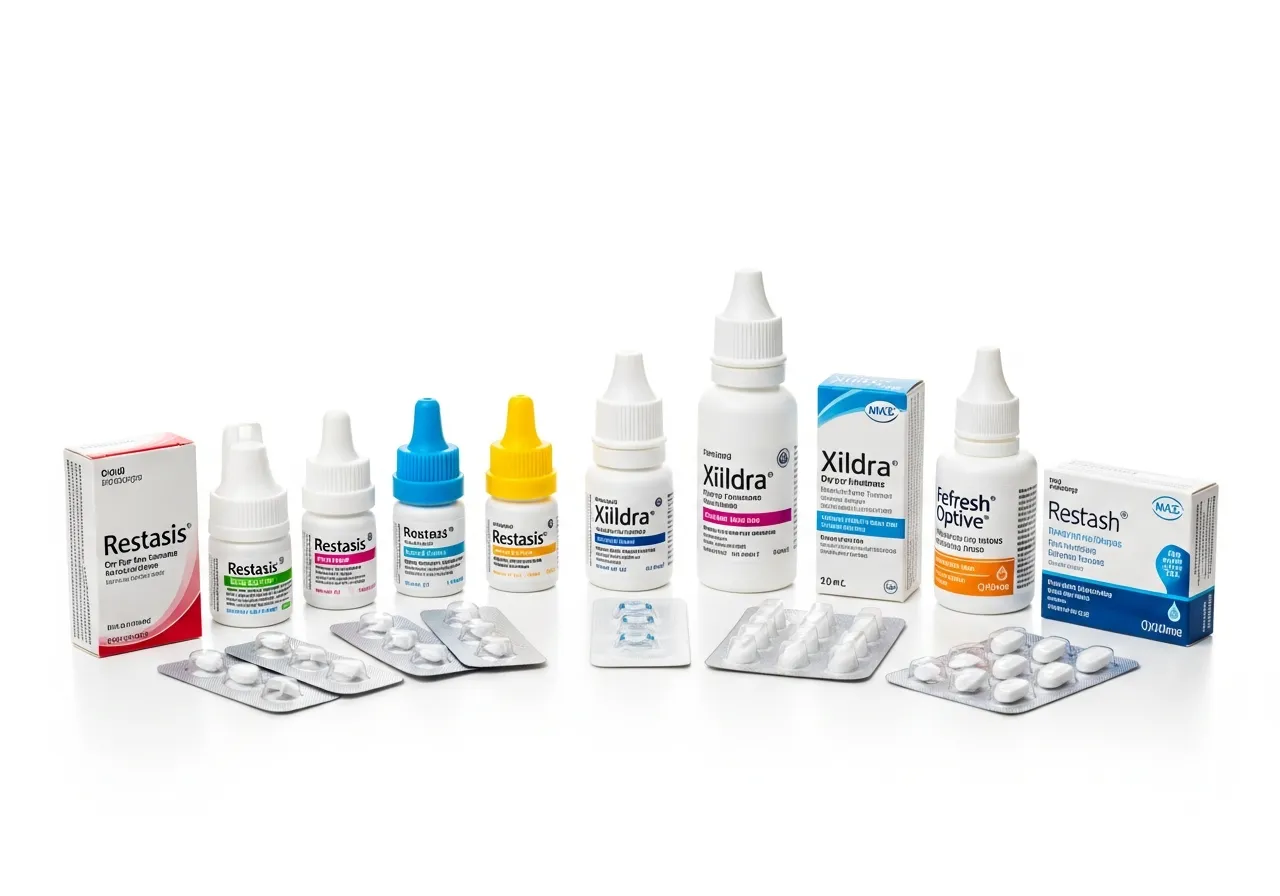
Artificial tears are usually the first thing people reach for when their eyes feel dry, and for mild cases they can be enough. But many patients discover that no matter how often they use drops, the relief never lasts. They cycle through brand after brand, wondering if they are doing something wrong. The truth is that over-the-counter drops have a built-in limitation, and understanding it is the key to knowing what to do next.
For moderate to severe dry eye, prescription therapies work on a completely different level than lubricating drops. Rather than simply adding moisture, they target the inflammation and dysfunction that cause the dryness in the first place. Dr. Jennifer Tabiza at Westchester Vision Care helps patients understand when it is time to move beyond over-the-counter options and what prescription treatment involves.
Why Artificial Tears Have Limits
Artificial tears do one thing: they add lubrication to the surface of the eye. That is genuinely helpful for temporary or mild dryness, and for many people an occasional drop is all they need. But lubricating drops do not change the underlying reasons your eyes are dry.
If your dry eye is driven by chronic inflammation, blocked oil glands, or reduced tear production, adding moisture on top is like mopping a floor while the faucet is still running. The relief is real but short-lived, because the source keeps producing the problem. This is why so many people feel stuck in a cycle of constant drop use — they are treating the symptom over and over rather than the cause. Recognizing this pattern is often the moment patients realize they need a different approach.
How Prescription Therapies Work
Prescription dry eye medications are designed to address the disease process itself. Rather than just lubricating, many of them work to reduce the chronic inflammation that keeps the ocular surface irritated and the glands underperforming. By calming that inflammation, they can help the eye's own tear-producing and oil-producing systems function better over time.
There are several categories of prescription therapy, and they include:
• Anti-inflammatory prescription drops that reduce surface inflammation and, over time, can help the eye produce a healthier, more stable tear film.
• Short courses of other prescription medications used to calm acute flare-ups under a doctor's supervision.
• In-office procedures and devices, prescribed and performed by your eye doctor, that address gland dysfunction directly.
Because these treatments work gradually and act on the underlying process, they often take several weeks to show their full effect. Patience and consistency matter.
When Prescription Treatment Makes Sense
So how do you know when it is time to move beyond drops? A few signs suggest that a prescription-level approach may be appropriate:
• Your symptoms persist despite regular use of artificial tears.
• Your eyes are frequently red, irritated, burning, or gritty rather than only occasionally dry.
• Your dry eye interferes with daily activities like reading, driving, or screen work.
• You have been diagnosed with meibomian gland dysfunction or ocular surface inflammation.
The only way to know for certain is a proper evaluation. Prescription therapies are, by definition, tailored to your specific diagnosis. Dr. Tabiza assesses your tear film, lid health, gland function, and the degree of inflammation to determine which approach fits your situation. This careful, individualized process ensures you are treated for what is actually happening in your eyes.
A Comprehensive Path Forward
Prescription therapy is rarely used alone. It works best as part of a comprehensive plan that may also include in-office treatments like OptiLIGHT intense pulsed light and TempSure Envi radiofrequency, plus a consistent home routine of lid hygiene, warmth, and omega-3 support. Each piece reinforces the others, and together they can finally break the cycle that drops alone never could.
If you feel like you have tried everything at the drugstore and your eyes are still dry, that is exactly the point to seek professional help. There is very likely an option you have not yet explored. Dr. Jennifer Tabiza sees patients age 10 and older at Westchester Vision Care in Westchester, Los Angeles, serving the surrounding Westside and beach communities. Schedule a consultation to build a treatment plan that addresses the real cause of your dry eye.
See an eye doctor in Westchester, Los Angeles
We welcome patients from Playa Vista, Marina del Rey, Playa del Rey, El Segundo and the surrounding 90045 neighborhoods.
8610 S Sepulveda Blvd #100, Los Angeles, CA 90045 · (310) 670-1888
Book a ConsultationThis article provides general education, not a diagnosis or individualized medical advice. Please see an eye care professional about your specific symptoms.