
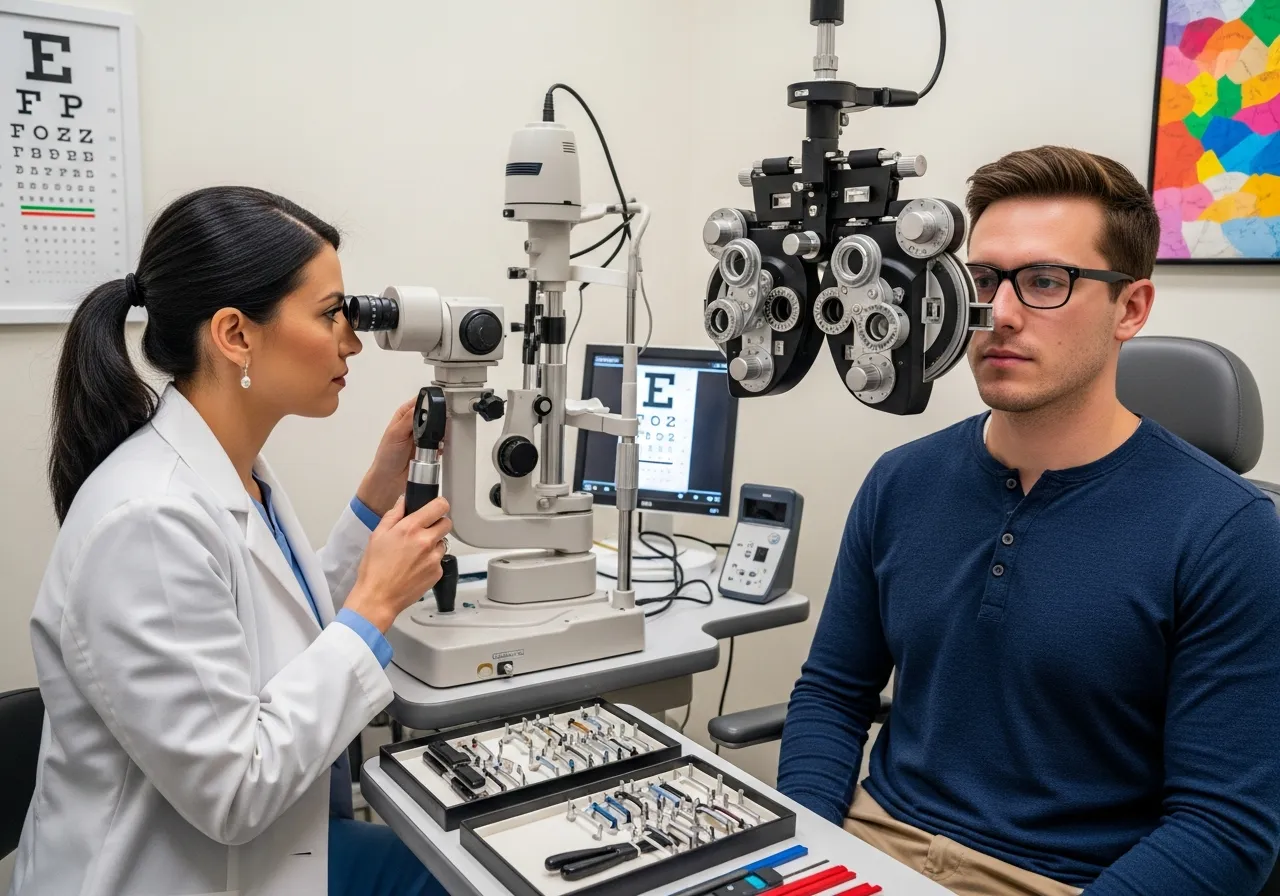
If you have had a comprehensive eye exam, you have probably experienced tonometry — the test that measures the pressure inside your eye — even if you did not know its name. It might have been the gentle puff of air that made you blink, or a small probe that briefly touched the front of your eye after a drop of numbing solution.
That measurement matters more than most people realize. The pressure inside your eye, called intraocular pressure, is one of the most important warning signs for glaucoma, a group of diseases that quietly damage the optic nerve and can steal peripheral vision before you notice anything is wrong. Because glaucoma often has no early symptoms, tonometry is a key part of catching problems while there is still time to protect your sight.
Dr. Jennifer Tabiza sees patients age 10 and older at Westchester Vision Care in the Westchester neighborhood of Los Angeles, and eye pressure measurement is a routine, essential part of the comprehensive exam. Here is what you should know about this quick but powerful test.
What Eye Pressure Is and Why It Matters
Your eye is filled with fluid that maintains its shape and nourishes internal structures. This fluid is constantly produced and drained in a delicate balance. When the drainage system does not keep up, fluid backs up and pressure inside the eye rises.
Elevated intraocular pressure is significant because it can damage the optic nerve — the cable that carries visual information from your eye to your brain. Over time, this damage produces glaucoma, which typically erodes peripheral vision first and progresses so gradually that many people do not notice until substantial vision has been lost.
It is worth noting that high pressure does not always mean glaucoma, and some people develop glaucoma even with pressures in the normal range. That is exactly why tonometry is used together with other tests rather than as a standalone verdict.
How Tonometry Is Performed
There are several ways to measure eye pressure, and your provider will choose the method that fits the situation. Common approaches include:
• Applanation tonometry, often considered a reference standard, where a numbing drop is applied and a small probe gently touches the front of the eye to measure the force needed to flatten a tiny area of the cornea.
• Non-contact tonometry, the familiar puff of air that flattens the cornea briefly without touching the eye.
• Handheld tonometers that make a brief, light contact with the numbed eye surface.
Whichever method is used, tonometry is quick and painless. With contact methods, a numbing drop means you feel little or nothing; with the air-puff method, the main sensation is a brief startle. The whole measurement takes only moments.
What the Numbers Mean
Eye pressure is reported in millimeters of mercury, the same unit used for blood pressure. There is a typical range considered normal, but the meaning of any single reading depends on the individual. Corneal thickness, time of day, and other factors can all influence the measurement.
A higher-than-expected reading does not automatically mean you have glaucoma — it signals that further evaluation is warranted. Conversely, a normal reading does not completely rule glaucoma out. This is why Dr. Tabiza interprets your pressure alongside other findings, such as the appearance of your optic nerve, your visual field, and detailed imaging of the nerve.
For patients who are being monitored for glaucoma or elevated pressure, tracking these numbers over multiple visits is often more revealing than any single reading.
Tonometry Within a Complete Glaucoma Evaluation
Diagnosing and monitoring glaucoma is like assembling a puzzle, and tonometry is one important piece. A full evaluation also includes examining the optic nerve for signs of damage, mapping your peripheral vision with visual field testing, and imaging the nerve fibers with technology such as OCT.
This layered approach reflects the prevention-first philosophy at Westchester Vision Care. Catching elevated pressure or early nerve changes before symptoms appear gives you and Dr. Tabiza the best chance to protect your vision through timely treatment or referral.
Because risk factors like family history, age, and certain medical conditions can raise your chances of developing glaucoma, regular exams are especially important if any of these apply to you.
Protect Your Vision with Regular Screening
Tonometry takes only seconds, but the information it provides can help preserve your vision for a lifetime. Since glaucoma can advance silently, the simple act of showing up for regular comprehensive eye exams is one of the most effective ways to catch it early.
If it has been more than a year since your last eye exam — or if glaucoma runs in your family — now is a good time to schedule. Dr. Jennifer Tabiza sees patients age 10 and older at Westchester Vision Care in Westchester, Los Angeles, CA 90045. Call (310) 670-1888 or book online to have your eye pressure and overall eye health checked.
See an eye doctor in Westchester, Los Angeles
We welcome patients from Playa Vista, Marina del Rey, Playa del Rey, El Segundo and the surrounding 90045 neighborhoods.
8610 S Sepulveda Blvd #100, Los Angeles, CA 90045 · (310) 670-1888
Book a ConsultationThis article provides general education, not a diagnosis or individualized medical advice. Please see an eye care professional about your specific symptoms.