
When a hitter reads a pitch a fraction of a second sooner, a goalkeeper reacts to a shot before the crowd even sees it, or a point guard threads a pass through traffic, we tend to call it instinct. In reality, a huge portion of what separates good athletes from great ones happens in the visual system — and much of it can be trained.
Sports vision training is a specialized form of visual skills development focused on the demands of athletic performance. It builds on the same principles as vision therapy but targets the speed, accuracy, and coordination that competition requires. Just as athletes condition their muscles and cardiovascular systems, they can condition how quickly and accurately their eyes and brain process the game.
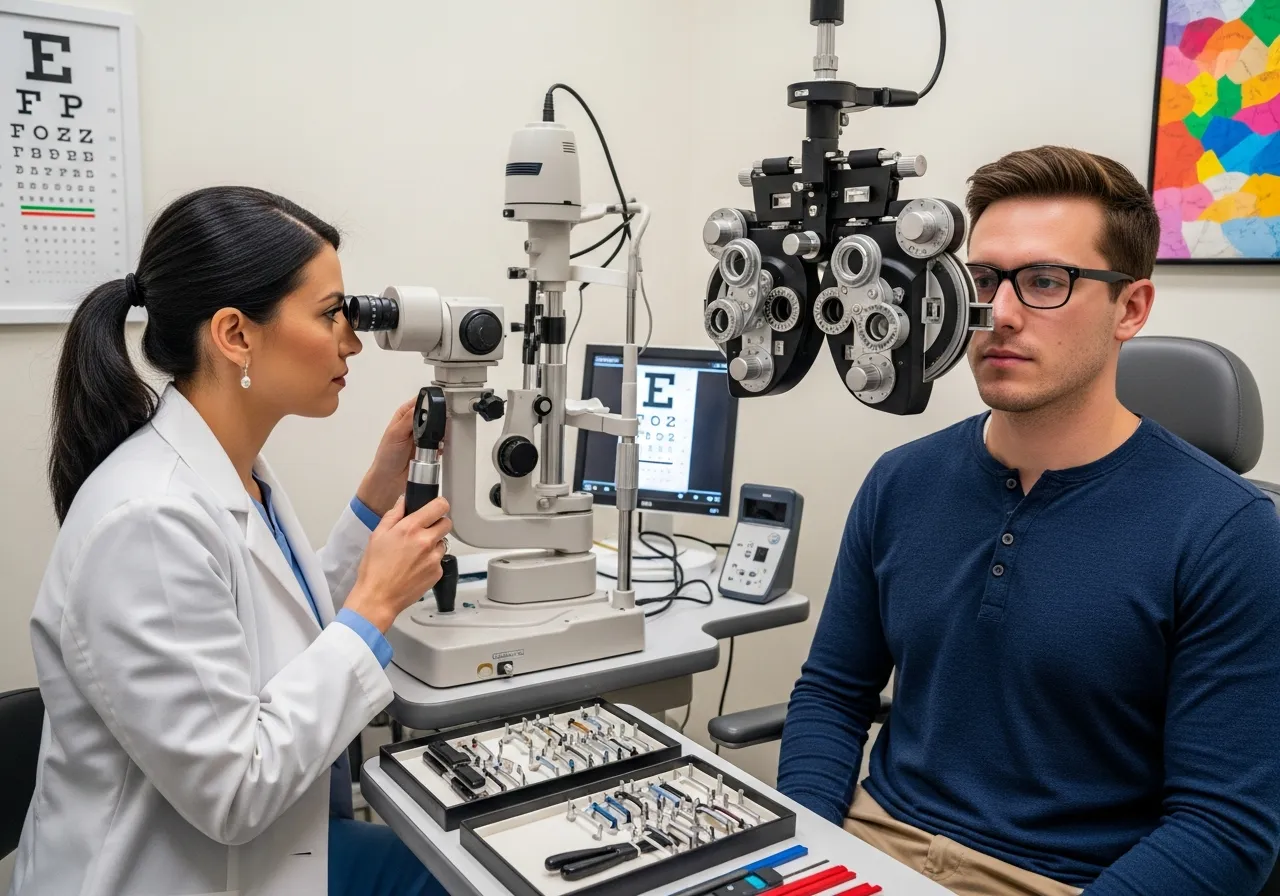
At Westchester Vision Care in the Westchester neighborhood of Los Angeles, Dr. Jennifer Tabiza evaluates the visual skills that matter most on the field and court for patients age 10 and older, helping athletes understand where their vision is strong and where sharpening it could give them an edge.
The Visual Skills Behind Athletic Performance
Sharp eyesight — seeing 20/20 — is only the foundation. On top of it sit a range of dynamic skills that determine how well an athlete actually performs under pressure. These skills work together in fractions of a second, and small improvements can translate into meaningful gains.
Key sports vision skills include:
• Dynamic visual acuity — keeping a fast-moving object clear, such as a tennis ball or hockey puck.
• Eye tracking — following a moving target smoothly and accurately without losing it.
• Depth perception — judging distance and space precisely for catching, passing, and positioning.
• Peripheral awareness — noticing teammates, opponents, and openings at the edges of vision.
• Visual reaction time — how quickly the brain processes what the eyes see and triggers a response.
• Eye-hand and eye-body coordination — translating visual information into fast, accurate movement.
• Focus flexibility — shifting attention between near and far, like a quarterback reading receivers at different distances.
An athlete can have flawless mechanics and elite fitness, yet still be limited by any weak link in this chain.
Who Benefits From Sports Vision Training
Sports vision training is valuable across a wide range of activities, not just at the professional level. Young athletes developing their skills, weekend competitors wanting to stay sharp, and serious players chasing every advantage can all benefit.
Fast-paced, reactive sports tend to show the biggest gains because they place heavy demands on tracking, timing, and peripheral awareness. Baseball and softball hitters rely on picking up the ball early; tennis, basketball, volleyball, and soccer players depend on constant tracking and spatial judgment; and combat and racket sports demand lightning-quick visual reactions.
Even athletes without any visual deficit can improve, because the goal is not to fix a problem but to push existing skills to a higher level of speed and consistency. That said, training also uncovers hidden weaknesses — some athletes discover an eye-teaming or focusing issue that has quietly held back their performance for years.
How a Training Program Works
Every program begins with a thorough assessment of an athlete's current visual skills, measured against the specific demands of their sport and position. This baseline reveals which abilities are already strong and which will yield the greatest return if trained.
From there, a customized plan uses drills and technology designed to challenge and sharpen those skills. Training might involve fast-paced tracking and reaction exercises, activities that expand peripheral awareness, focus-shifting drills, and coordination tasks that link vision to movement. Difficulty increases as the athlete improves, keeping the visual system challenged.
Consistency is what turns practiced skills into automatic, game-ready responses. Over time, the aim is for faster reactions and better anticipation to feel effortless, so the athlete can focus on strategy and execution rather than on simply keeping up with the play.
Protecting Vision While Enhancing It
Performance and eye health go hand in hand. Any sports vision program should be built on a healthy, well-corrected visual system, so a comprehensive eye exam is an important companion to training. For athletes who need vision correction, options like contact lenses or sport-specific eyewear can be discussed to keep vision sharp and safe during play.
Eye protection also matters in contact and projectile sports, where an impact can cause serious, lasting injury. Combining smart protection with skill development means an athlete can push their performance without putting their long-term vision at risk.
The most successful athletes treat their eyes as the high-performance tools they are — worth training, protecting, and maintaining just like the rest of the body.
Ready to Sharpen Your Game
Whether you are a young athlete building a foundation or a competitor searching for that final edge, evaluating your visual skills is a smart place to start. You may be surprised how much room there is to react faster and see the game more clearly.
Dr. Jennifer Tabiza sees patients age 10 and older at Westchester Vision Care in the Westchester neighborhood of Los Angeles, CA 90045. To schedule a sports vision evaluation, call (310) 670-1888 or book online today.
See an eye doctor in Westchester, Los Angeles
We welcome patients from Playa Vista, Marina del Rey, Playa del Rey, El Segundo and the surrounding 90045 neighborhoods.
8610 S Sepulveda Blvd #100, Los Angeles, CA 90045 · (310) 670-1888
Book a ConsultationThis article provides general education, not a diagnosis or individualized medical advice. Please see an eye care professional about your specific symptoms.