
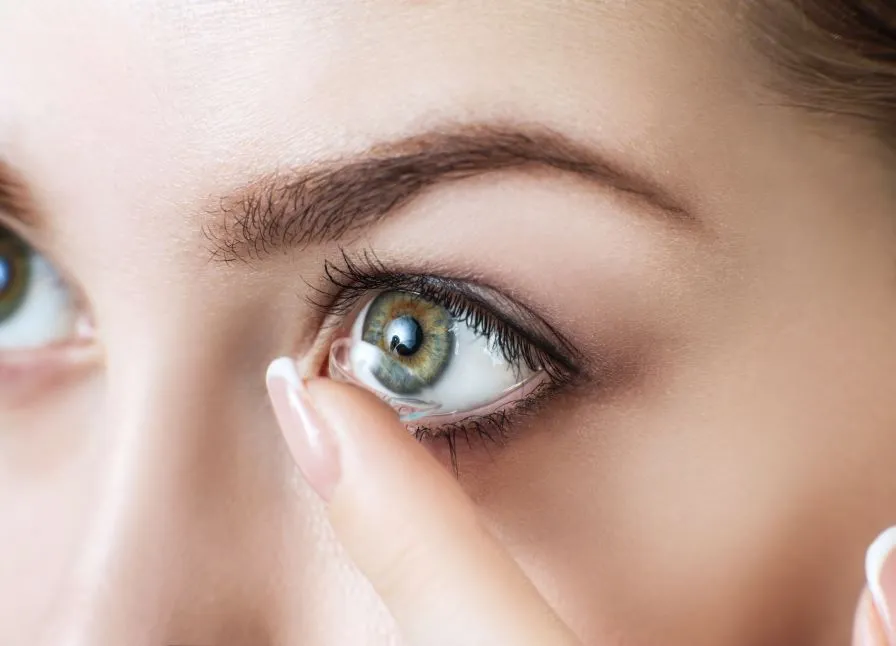
Most people who want contacts are fitted successfully with standard soft lenses. But a significant number of patients hear something disappointing at the optical shop: their eyes are "hard to fit," and off-the-shelf lenses simply will not give them clear, comfortable vision. If that is you, it does not mean contacts are off the table — it means you may be a candidate for specialty contact lenses.
Specialty lenses are designed for eyes that fall outside the standard mold: highly irregular corneas, conditions like keratoconus, severe dry eye, high astigmatism, or eyes that have undergone surgery or injury. These lenses are custom-fit and often custom-made, and in the right hands they can restore vision that patients had given up on. At Westchester Vision Care in the Westchester neighborhood of Los Angeles, Dr. Jennifer Tabiza fits specialty lenses for patients age 10 and older who need more than a conventional lens can offer.
Who Needs Specialty Lenses?
Several situations commonly call for a specialty lens rather than a standard soft one:
• Keratoconus and other corneal irregularities, where the cornea's uneven shape scatters light and blurs vision through ordinary lenses.
• High or hard-to-correct astigmatism that standard torics cannot handle well.
• Severe dry eye, where conventional lenses feel uncomfortable or worsen symptoms.
• Post-surgical or post-injury corneas, including eyes that have had refractive surgery or corneal transplants.
• Presbyopia combined with other complicating factors.
In each of these cases, the goal is the same: create a smooth, stable optical surface and a healthy fit on an eye that does not conform to a standard lens design.
Scleral Lenses: Vaulting Over the Problem
Scleral lenses are one of the most versatile specialty options. These are large rigid gas permeable lenses that vault entirely over the cornea and rest on the sclera — the white of the eye — rather than touching the sensitive corneal surface. The space between the lens and the cornea is filled with a reservoir of fluid.
This design offers two big advantages. First, by creating a perfectly smooth optical surface, scleral lenses can deliver excellent vision even over a highly irregular cornea. Second, the fluid reservoir continuously bathes the eye, making sclerals a superb option for people with severe dry eye. Patients who once could not tolerate contacts at all are often surprised by how comfortable well-fitted sclerals feel.
Rigid Gas Permeable and Hybrid Lenses
Rigid gas permeable (RGP) lenses are smaller, firm lenses that hold their shape on the eye, creating a smooth refracting surface over an irregular cornea. Because they maintain a defined shape, they can correct distortions that soft lenses cannot, providing crisp vision for conditions like keratoconus and high astigmatism. They also allow plenty of oxygen to reach the cornea.
Some patients find RGP lenses take time to get used to, since a rigid lens feels different from a soft one. Hybrid lenses bridge that gap: they combine a rigid gas permeable center — for sharp optics — with a soft outer skirt that improves comfort and helps the lens stay centered. For patients who need the vision benefits of a rigid lens but want more of the comfort of a soft one, hybrids can be an excellent compromise.
The Fitting Process Is Different — and That's a Good Thing
Fitting a specialty lens is far more involved than handing over a trial pair. It begins with detailed measurements and often corneal topography — a precise map of the eye's surface. From there, Dr. Tabiza selects or designs a lens tailored to your unique corneal shape, then evaluates how it fits and performs on your eye.
Because these lenses are custom, achieving the ideal fit frequently takes several visits and adjustments. That extra effort is exactly what makes specialty lenses successful where standard lenses fail. The payoff is a lens that not only corrects your vision but also keeps your eyes healthy and comfortable throughout the day.
Renewed Vision for Hard-to-Fit Eyes
If you have been told your eyes are too complicated for contacts, specialty lenses may change that story. Advances in materials and design mean that many people with keratoconus, severe dry eye, irregular corneas, or complex prescriptions can now achieve the clear, comfortable vision that once seemed out of reach.
The first step is a thorough evaluation to understand your eyes and determine which specialty lens is the best match. Dr. Jennifer Tabiza fits patients age 10 and older at Westchester Vision Care in Westchester, Los Angeles, CA 90045. To find out whether specialty contact lenses could work for you, call (310) 670-1888 or book online for a consultation.
See an eye doctor in Westchester, Los Angeles
We welcome patients from Playa Vista, Marina del Rey, Playa del Rey, El Segundo and the surrounding 90045 neighborhoods.
8610 S Sepulveda Blvd #100, Los Angeles, CA 90045 · (310) 670-1888
Book a ConsultationThis article provides general education, not a diagnosis or individualized medical advice. Please see an eye care professional about your specific symptoms.