
Cataract surgery is one of the most common and successful procedures in all of medicine. During the operation, the eye's cloudy natural lens is removed and replaced with a clear artificial lens called an intraocular lens, or IOL. What many people do not realize is that the choice of IOL can dramatically shape their vision for the rest of their lives.
Standard, or monofocal, IOLs restore clear vision at a single distance, usually far away, meaning most patients still rely on reading glasses afterward. Premium IOLs, by contrast, are designed to provide clear vision at multiple distances or to correct astigmatism, reducing or even eliminating the need for glasses for many activities.
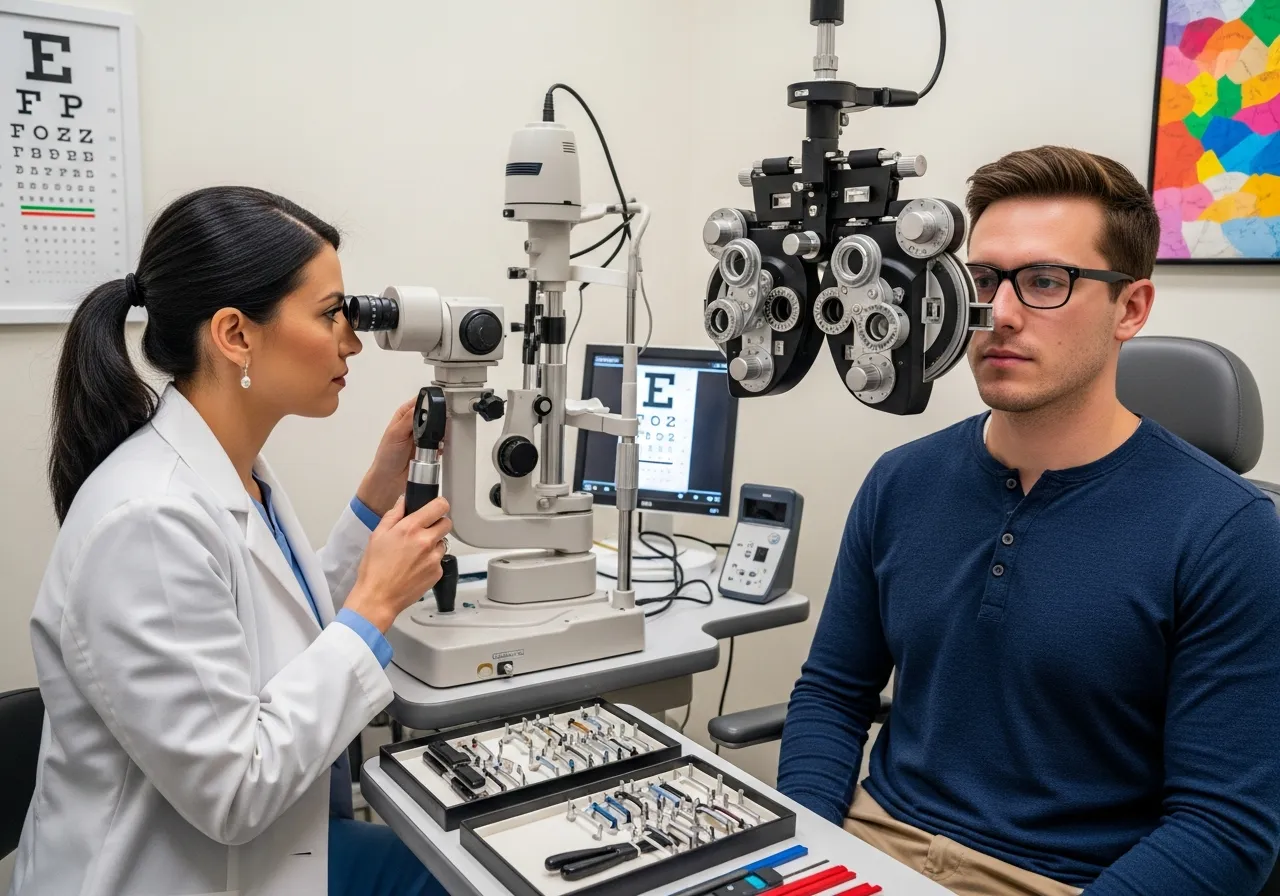
At Westchester Vision Care, Dr. Jennifer Tabiza helps patients age 10 and older understand their options and prepare for cataract surgery so they can make informed choices. Here is a look at who tends to be a good candidate for premium lenses.
Understanding the Types of Premium IOLs
Premium IOLs come in several categories, each designed to solve a different visual challenge:
• Multifocal IOLs provide clear vision at multiple distances, such as near and far, reducing the need for reading glasses.
• Extended-depth-of-focus (EDOF) IOLs offer a continuous range of vision, often prioritizing intermediate and distance vision with a smoother transition.
• Toric IOLs are built to correct astigmatism, sharpening vision for people whose corneas are unevenly curved.
Some premium lenses combine features, such as a toric multifocal lens for someone with both astigmatism and a desire to reduce reading glasses. The right choice depends on your eyes, your lifestyle, and your visual priorities.
Lifestyle and Visual Goals Matter Most
The single most important factor in choosing a premium IOL is understanding how you want to use your vision. There is no universally best lens; the best lens is the one that matches your daily life.
Someone who spends hours reading, doing detailed handwork, or using a computer may prioritize near and intermediate vision. A person who loves night driving may weigh how a given lens handles glare and halos. An avid golfer or driver may value crisp distance vision above all.
Premium lenses often involve tradeoffs. Multifocal lenses, for example, provide a broad range of vision but can produce more glare or halos at night for some people, especially early on as the brain adapts. A candid conversation about your habits and tolerance for these tradeoffs is essential to choosing well.
Eye Health Requirements
Premium IOLs perform best in eyes that are otherwise healthy. Because these lenses rely on the eye's ability to process the images they deliver, certain conditions can limit how well they work.
Conditions such as significant macular degeneration, advanced glaucoma, severe dry eye, or other retinal or corneal diseases can reduce the benefit of a premium lens, and in some cases make a standard lens the wiser choice. Uncontrolled dry eye in particular can blur the results of any lens and often needs to be treated before surgery.
This is why a thorough pre-surgical evaluation is so important. Detailed measurements of the eye, an assessment of the retina and optic nerve, and an evaluation of the ocular surface all help determine which lenses are realistic options for you.
Setting Realistic Expectations
Premium IOLs can be wonderfully freeing, but managing expectations is part of a satisfying outcome. Even with the best lens, most patients still keep a pair of glasses for certain tasks, and it can take time for the brain to adapt to a new way of seeing.
Good candidates tend to be people who understand the tradeoffs, have realistic goals, and are motivated to reduce their dependence on glasses. Those who expect absolutely perfect, glasses-free vision in every situation may be disappointed, regardless of the lens chosen.
The most satisfied patients are those who work closely with their eye doctor and surgeon to select a lens aligned with their real-life priorities and who go in with a clear understanding of what to expect.
Plan Your Cataract Surgery With Dr. Tabiza
Choosing an intraocular lens is one of the most important decisions you will make about your long-term vision. With the right guidance, you can select a lens that fits your eyes, your lifestyle, and your goals, and approach cataract surgery with confidence.
Dr. Jennifer Tabiza provides comprehensive evaluations, honest guidance about premium lens options, and coordinated care with your cataract surgeon. She sees patients age 10 and older at Westchester Vision Care in Westchester, Los Angeles. Call (310) 670-1888 or book online to learn more about your options.
See an eye doctor in Westchester, Los Angeles
We welcome patients from Playa Vista, Marina del Rey, Playa del Rey, El Segundo and the surrounding 90045 neighborhoods.
8610 S Sepulveda Blvd #100, Los Angeles, CA 90045 · (310) 670-1888
Book a ConsultationThis article provides general education, not a diagnosis or individualized medical advice. Please see an eye care professional about your specific symptoms.