
Few eye complaints are as recognizable — or as unsettling — as waking up with a red, weepy, crusted eye. "Pink eye" is the everyday name for conjunctivitis, an inflammation of the conjunctiva, the thin, clear membrane that covers the white of the eye and lines the inside of the eyelids. When that tissue becomes irritated or infected, its tiny blood vessels swell and become more visible, giving the eye its characteristic pink or red appearance.
The tricky part is that conjunctivitis is not a single condition. It has several very different causes — viruses, bacteria, and allergens are the most common — and they can look almost identical to the untrained eye. Because each type calls for a different response, guessing wrong can mean weeks of unnecessary discomfort or an infection that spreads to family members. At Westchester Vision Care in the Westchester neighborhood of Los Angeles, Dr. Jennifer Tabiza helps patients age 10 and older sort out what is really going on and treat it properly.
The Three Main Types of Pink Eye
Understanding which type of conjunctivitis you have is the first step toward the right treatment. Each has its own pattern of symptoms:
• Viral conjunctivitis is the most common form and is highly contagious. It often starts in one eye and spreads to the other, tends to produce a watery discharge, and frequently accompanies a cold or upper respiratory infection. Like most viral illnesses, it usually has to run its course.
• Bacterial conjunctivitis typically produces a thicker, yellow or greenish discharge that can crust over the lashes and glue the eyelids shut overnight. It may affect one or both eyes and often responds well to prescription antibiotic drops or ointment.
• Allergic conjunctivitis is not contagious at all. It is triggered by pollen, dust, pet dander, or other allergens, usually affects both eyes at once, and is dominated by itching — often intense — along with tearing and puffy lids.
There are also less common causes, such as irritation from chemicals, smoke, chlorine, or a foreign object, and reactions to contact lenses or their solutions. Because the treatments diverge so sharply, an accurate diagnosis is far more valuable than a lucky guess.
How Conjunctivitis Is Diagnosed
Diagnosing pink eye is about more than confirming that the eye is red. Dr. Tabiza asks about how the symptoms started, whether one or both eyes are affected, the type of discharge, and whether there is itching, recent illness, or allergy exposure. These clues point strongly toward one cause over another.
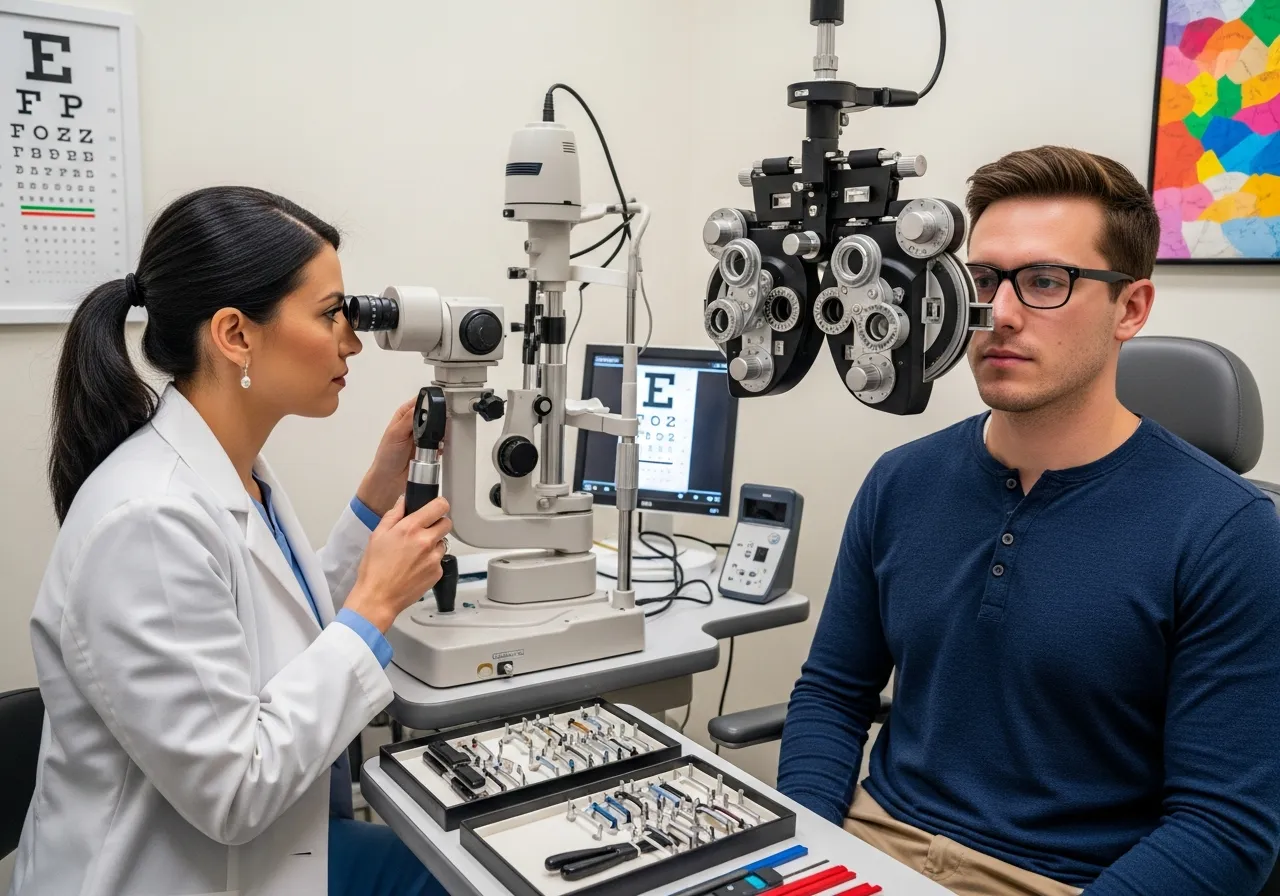
A slit lamp examination — a microscope designed for the eye — lets the doctor look closely at the conjunctiva, cornea, and eyelids for signs that distinguish viral, bacterial, and allergic causes, and to rule out more serious conditions that can masquerade as simple pink eye. Redness combined with significant pain, light sensitivity, or blurred vision is never something to shrug off, because those symptoms can signal a corneal infection, iritis, or other issues that need prompt care.
For contact lens wearers, an exam is especially important. Redness in a lens wearer can indicate a corneal ulcer or an infection that threatens vision, so it should always be evaluated rather than treated at home.
Treatment Depends on the Cause
Because the three main types of pink eye respond to different measures, treatment is tailored to the diagnosis:
• Viral pink eye usually clears on its own over one to two weeks. Care focuses on comfort — cool compresses, lubricating drops, and rest — while the immune system does its work. Antibiotics do not help a virus, which is one reason self-treatment often fails.
• Bacterial pink eye is typically treated with prescription antibiotic drops or ointment, which can shorten its course and reduce the chance of spreading it.
• Allergic pink eye improves when the allergen is avoided and is managed with antihistamine or anti-inflammatory eye drops, cool compresses, and sometimes oral allergy medication.
Whatever the cause, avoid rubbing your eyes, do not share towels or pillowcases, and if you wear contacts, switch to glasses until the eye is fully healed. Never use leftover medication from a previous episode without guidance — the cause this time may be entirely different.
Preventing the Spread
Viral and bacterial conjunctivitis spread easily, which is why outbreaks move quickly through households, schools, and workplaces. A few simple habits dramatically reduce transmission:
• Wash your hands often and avoid touching your eyes.
• Do not share towels, washcloths, pillows, eye drops, or makeup.
• Throw away or thoroughly clean eye makeup used while infected.
• Disinfect surfaces and stay home from work or school while the eye is actively weeping, per your doctor's advice.
These precautions protect the people around you and lower your chance of reinfecting yourself once the eye begins to recover.
When to Call Westchester Vision Care
Mild, watery redness with a cold may not need an office visit, but certain signs warrant a prompt evaluation: significant eye pain, sensitivity to light, blurred or reduced vision, thick colored discharge, symptoms in a contact lens wearer, or pink eye that is not improving after a few days. These can point to something more serious than routine conjunctivitis.
Dr. Jennifer Tabiza sees patients age 10 and older at Westchester Vision Care in Westchester, Los Angeles, CA 90045. If you are dealing with a red, irritated, or weepy eye and want to know exactly what is causing it — and how to treat it correctly — call (310) 670-1888 or book online. A quick exam can spare you weeks of discomfort and protect your vision.
See an eye doctor in Westchester, Los Angeles
We welcome patients from Playa Vista, Marina del Rey, Playa del Rey, El Segundo and the surrounding 90045 neighborhoods.
8610 S Sepulveda Blvd #100, Los Angeles, CA 90045 · (310) 670-1888
Book a ConsultationThis article provides general education, not a diagnosis or individualized medical advice. Please see an eye care professional about your specific symptoms.