
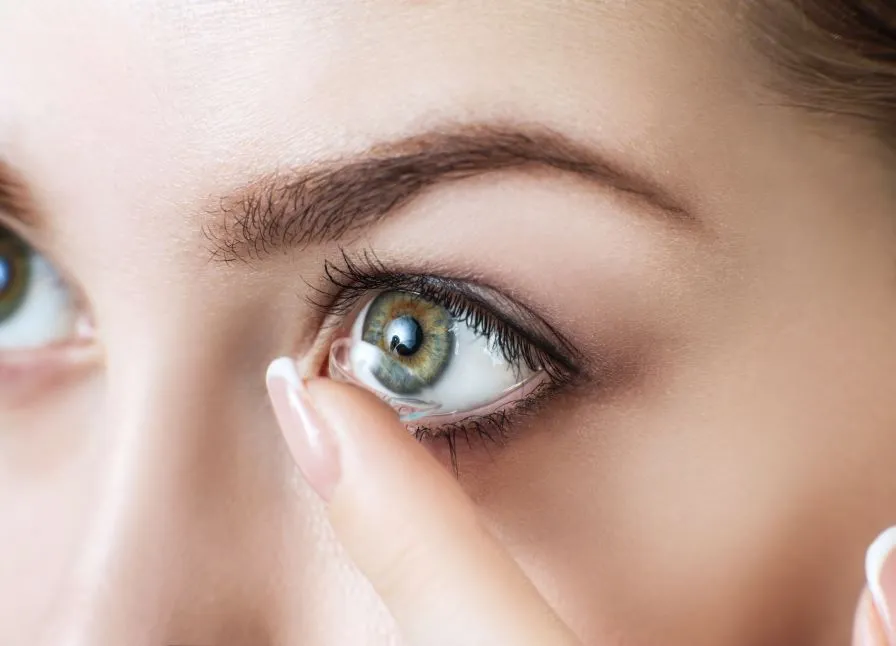
For anyone tired of fumbling for glasses in the morning or dealing with contact lenses during a long, active day, the idea of correcting your vision while you sleep sounds almost too good to be true. Yet that is exactly what orthokeratology — often shortened to Ortho-K and also called corneal refractive therapy — is designed to do.
Ortho-K uses specially designed rigid lenses worn only at night. While you sleep, the lenses gently and temporarily reshape the front surface of the eye, the cornea. In the morning you remove the lenses and, for the rest of the day, enjoy clear vision without any correction. It is a non-surgical, fully reversible approach that has attracted athletes, swimmers, dusty-environment workers, and parents seeking myopia control for their children.
At Westchester Vision Care in the Westchester neighborhood of Los Angeles, Dr. Jennifer Tabiza fits Ortho-K lenses for suitable patients age 10 and older after a careful evaluation to confirm the approach is a good match for their eyes and lifestyle.
How Ortho-K Works
The cornea is the clear, dome-shaped front of the eye, and its curvature is a major factor in how light focuses onto the retina. In nearsightedness, the way the eye focuses light causes distant objects to appear blurry. Ortho-K lenses are custom-designed to apply gentle, precise pressure that flattens the central cornea just enough to correct that focusing error.
Because the cornea is a flexible tissue, this reshaping is temporary. Wearing the lenses each night maintains the corrected shape, giving you clear vision throughout the following day. If you stop wearing the lenses, the cornea gradually returns to its original shape and your previous prescription comes back — which is why Ortho-K is described as fully reversible.
The lenses themselves are made from highly breathable materials that allow oxygen to reach the eye during sleep. The custom design is based on detailed measurements and mapping of your cornea, so precision in the fitting process is essential.
Who Is a Good Candidate
Ortho-K is most commonly used to correct nearsightedness, and it can also help some people with mild astigmatism. It tends to appeal to people whose lifestyles make daytime glasses or contacts inconvenient.
Good candidates often include:
• Athletes and active individuals who find glasses and contacts cumbersome during sports.
• Swimmers, and those in dusty or windy environments where daytime contacts are irritating.
• People who are not candidates for or not ready for laser vision surgery.
• Children and teens whose parents are interested in slowing the progression of nearsightedness.
• Anyone who simply prefers to be free of daytime correction.
Not everyone is a candidate, however. The degree of nearsightedness, corneal shape, tear film health, and overall eye health all factor into the decision. A thorough evaluation is necessary to determine whether Ortho-K can meet your needs safely.
Ortho-K and Myopia Control in Children
One of the most compelling uses of Ortho-K is in children, where it serves a dual purpose. In addition to providing clear daytime vision without glasses, Ortho-K is one of the recognized strategies for slowing the progression of myopia, or nearsightedness, in growing eyes.
This matters because myopia in children tends to worsen over time, and higher levels of myopia are associated with greater long-term risks to eye health. Slowing that progression can help protect a child's vision well into adulthood. For families weighing options, Ortho-K offers the appealing combination of daytime freedom from glasses and a proactive role in managing how quickly nearsightedness advances.
Every child is different, so the suitability of Ortho-K for myopia control is determined during a comprehensive evaluation that considers the child's prescription, eye health, and ability to handle the lenses responsibly with parental support.
What to Expect From the Process
Getting started with Ortho-K begins with a detailed exam and corneal mapping to design lenses tailored to your eyes. Because the lenses are custom-made, the initial process involves fitting, follow-up visits, and fine-tuning to dial in the best result.
In the first days and weeks, vision may improve gradually as the cornea responds, and your doctor will monitor progress closely. Once the ideal correction is achieved, most wearers settle into a simple nightly routine. As with any contact lens, proper cleaning, handling, and follow-up care are essential to keep the eyes healthy and reduce the risk of infection.
Ongoing check-ups remain important so your doctor can confirm your corneas stay healthy and your vision stays stable. When cared for correctly, Ortho-K can be a comfortable, long-term part of your routine.
See if Ortho-K Is Right for You
Waking up to clear vision without reaching for glasses is a genuine possibility for many people, and it comes with the reassurance of being non-surgical and reversible. The only way to know if you or your child is a candidate is a personalized evaluation.
Dr. Jennifer Tabiza sees patients age 10 and older at Westchester Vision Care in the Westchester neighborhood of Los Angeles, CA 90045. To learn whether Ortho-K corneal refractive therapy fits your needs, call (310) 670-1888 or book online today.
See an eye doctor in Westchester, Los Angeles
We welcome patients from Playa Vista, Marina del Rey, Playa del Rey, El Segundo and the surrounding 90045 neighborhoods.
8610 S Sepulveda Blvd #100, Los Angeles, CA 90045 · (310) 670-1888
Book a ConsultationThis article provides general education, not a diagnosis or individualized medical advice. Please see an eye care professional about your specific symptoms.