
If you have ever been handed a bottle of artificial tears and told to "use them a few times a day," you already know how frustrating dry eye can be. Drops soothe the surface for a little while, but the relief fades and the cycle starts again. That is because most drops treat the symptom — a dry, irritated surface — rather than the reason the surface is drying out in the first place.
For the large majority of people with chronic dry eye, the real culprit lives in the eyelids. Along the edge of each lid sit dozens of tiny oil-producing glands called meibomian glands. Their job is to release a thin layer of oil onto your tears every time you blink, sealing in moisture so the tear film does not evaporate. When those glands become blocked, inflamed, or sluggish, the oil layer thins out and tears vanish too fast. This is called meibomian gland dysfunction, and it drives an estimated majority of dry eye cases. OptiLIGHT intense pulsed light therapy is one of the few treatments designed to address that root cause, and Dr. Jennifer Tabiza offers it at Westchester Vision Care.
What Meibomian Gland Dysfunction Actually Does
Think of your tear film as three layers stacked together: a water layer for moisture, a mucus layer that helps tears stick to the eye, and an oily outer layer that keeps everything from evaporating. The oil is the seal on the jar. Without it, even a perfectly normal amount of tears will disappear within seconds of a blink.
In meibomian gland dysfunction, the oil turns thick and waxy, the gland openings clog, and inflammation sets in along the lid margin. Over time, glands that stay blocked can shrink and stop producing oil altogether. Common signs that this is happening include:
• A gritty or sandy feeling, as if something is in your eye.
• Burning, stinging, or eyes that feel tired by the afternoon.
• Fluctuating or blurry vision that clears briefly when you blink.
• Redness along the lid margins or crusting at the lash line.
• Watery eyes — surprisingly, reflex tearing is a classic sign of an unstable tear film.
Because these symptoms overlap with allergies and screen fatigue, many people live with them for years before the underlying gland problem is identified.
How OptiLIGHT IPL Works
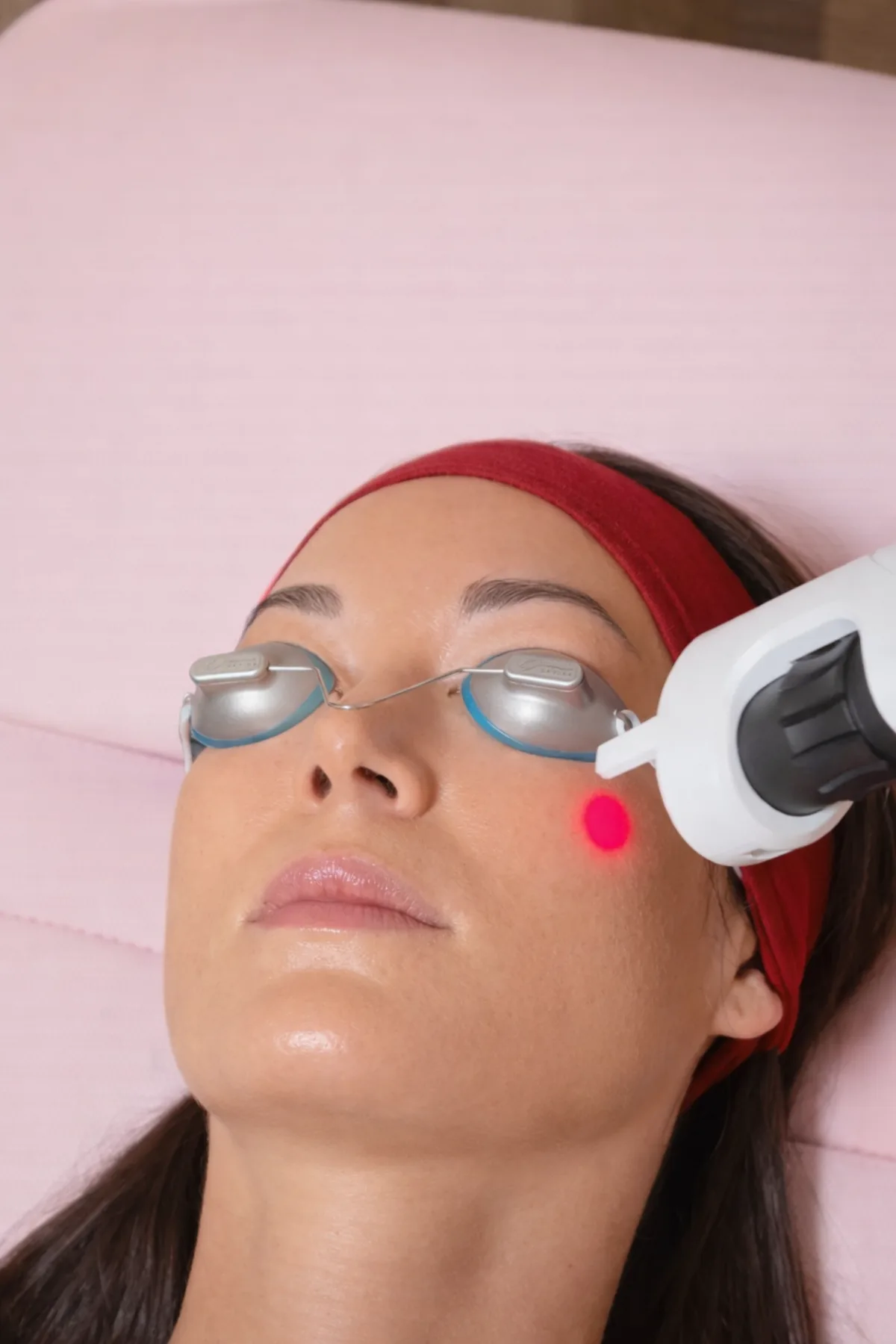
OptiLIGHT is an FDA-approved intense pulsed light device made by Lumenis and cleared specifically for managing dry eye caused by meibomian gland dysfunction. During treatment, precise pulses of light are applied to the skin across the cheeks and around the eyes. This is not a laser and it is not the same as cosmetic photofacials, even though the underlying technology is related.
The light works in several ways at once. It targets the abnormal blood vessels that feed inflammation along the lid margin, helping to calm the chronic irritation that keeps glands from working. The gentle warmth also helps soften and loosen the thickened oil trapped inside the glands, making it easier for them to release again. Many patients notice that their glands express more freely and their tears feel more stable after a full series.
A typical protocol is a series of treatments spaced a few weeks apart, often paired with gland expression performed in the office. Each session itself is brief. Your eyes are protected with shields throughout, and most people describe the sensation as a warm snap against the skin, not painful.
What to Expect and Who Is a Good Candidate
Before recommending OptiLIGHT, Dr. Tabiza performs a thorough dry eye evaluation to confirm that gland dysfunction is driving your symptoms. This may include imaging of the glands, an assessment of your tear film, and a look at the health of your lid margins. Matching the treatment to the actual cause is central to the prevention-first, whole-person approach at Westchester Vision Care.
Good candidates are typically adults with evaporative dry eye linked to meibomian gland dysfunction who have not found lasting relief from drops alone. Because the light interacts with skin, your provider will review your skin tone and history to confirm the treatment is appropriate and safe for you. There is little to no downtime — most people return to normal activities the same day, with a reminder to protect the treated skin from sun exposure.
OptiLIGHT is not a one-and-done cure. Meibomian gland dysfunction is a chronic condition, so the best results come from combining in-office treatment with a consistent home routine such as warm compresses, lid hygiene, and omega-3 support when recommended.
Taking the Next Step
The most encouraging part of the OptiLIGHT story is that it goes after the source of the problem rather than chasing symptoms. For many patients, that shift finally breaks the endless cycle of reaching for another bottle of drops.
If you have struggled with dry, tired, gritty eyes and drops have never solved it, a dry eye evaluation is the place to start. Dr. Jennifer Tabiza sees patients age 10 and older at Westchester Vision Care in Westchester, Los Angeles, serving Playa del Rey, Playa Vista, Marina del Rey, El Segundo, Culver City, and Ladera Heights. Schedule a consultation to find out whether OptiLIGHT IPL is the right fit for your eyes.
See an eye doctor in Westchester, Los Angeles
We welcome patients from Playa Vista, Marina del Rey, Playa del Rey, El Segundo and the surrounding 90045 neighborhoods.
8610 S Sepulveda Blvd #100, Los Angeles, CA 90045 · (310) 670-1888
Book a ConsultationThis article provides general education, not a diagnosis or individualized medical advice. Please see an eye care professional about your specific symptoms.