
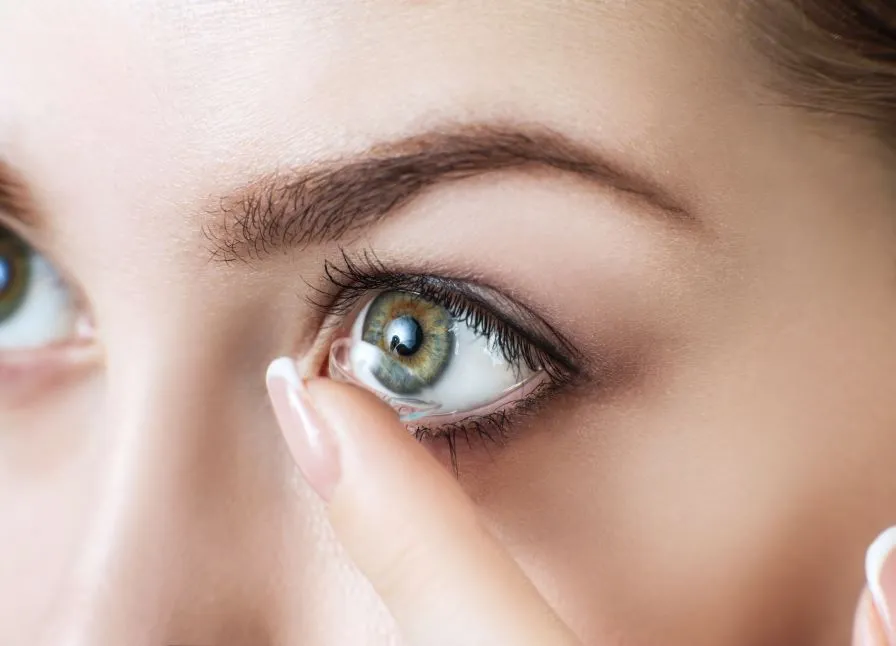
For a long time, color contact lenses had a reputation problem. The versions most people remember were opaque, cartoonishly bright, and easy to spot from across the room — the kind of thing you wore for a costume, not for everyday life. They sat on the eye like a painted disc, blocked the natural texture of the iris, and rarely looked like anything but contacts.
That has changed dramatically. A new wave of color lenses, many of them designed in South Korea, has redefined what these lenses can look like. Brands such as Hapa Kristin have built a following precisely because their lenses do not shout. Instead of covering the iris, they work with it, adding subtle depth, warmth, or a soft ring of definition that reads as your own eyes on a good day rather than as a costume piece.
But there is an important point that gets lost in the excitement over the aesthetics: color contact lenses are medical devices, regulated exactly like clear contacts. That is true no matter how cosmetic the purpose. At Westchester Vision Care in the Westchester neighborhood of Los Angeles, Dr. Jennifer Tabiza fits patients age 10 and older with contact lenses, and this guide explains both what makes the new generation of color lenses so appealing and why a proper fitting is not optional.
How Today's Color Lenses Differ From Old Costume Lenses
The biggest difference is in how the color is designed and layered. Older costume lenses used a solid, opaque tint that completely masked the wearer's natural iris, which is why they looked so artificial — real irises are not a single flat color but a complex pattern of fibers, flecks, and gradients.
Modern lenses like Hapa Kristin use finer, more translucent pigment patterns printed in layers, often with a graduated design that is denser toward the outer edge and lighter toward the pupil. This mimics the way a natural iris darkens near its rim and lets some of your own eye color show through, so the result blends rather than covers. The pigment is also sandwiched between layers of the lens material rather than sitting on the surface, which keeps the color away from direct contact with your eye.
The overall effect is designed to be seen only at conversational distance, not identified as contacts. Some designs simply enhance your existing color, others add a subtle limbal ring for definition, and some shift the tone entirely — but the best of them share a goal of looking like a natural variation of a real eye rather than an obvious overlay.
Color Lenses Are Medical Devices — Not a Fashion Accessory
This is the part that surprises many first-time buyers. In the United States, all contact lenses, including purely decorative ones with no vision correction, are regulated medical devices, and a valid prescription is required to buy them legally. The color and the correction are separate things: a lens can have zero prescription power and still absolutely require a fitting.
The reason is simple — anything that sits on the surface of your eye can cause harm if it does not fit correctly or is not cared for properly. A lens that is too tight or too loose for your particular eye can restrict oxygen, trap debris, scratch the cornea, or fail to move the way a healthy lens should. None of that has anything to do with the color; it has to do with the physical fit against your unique eye shape.
This is why decorative lenses sold without a prescription — at costume shops, gas stations, beauty counters, or unauthorized online sellers — are both illegal and genuinely dangerous. Poorly made, non-prescription color lenses have been linked to serious corneal infections, ulcers, and in the worst cases permanent vision loss. The lens looking good in a package tells you nothing about whether it fits your eye or is safe to wear.
Why a Proper Fitting Matters So Much
A contact lens fitting is not just about picking a color you like. It is a clinical process that protects the long-term health of your eyes, and it involves several steps that a package simply cannot replicate:
• Measuring the curvature and diameter of your cornea so the lens matches the shape of your eye rather than sitting too tight or too loose.
• Evaluating your tear film and ocular surface, since color lenses — like all contacts — depend on a healthy layer of tears to stay comfortable.
• Checking how the lens actually moves and centers on your eye once it is in, because a lens that looks fine at first can shift or grip in ways that cause problems over hours of wear.
• Confirming the lens material and replacement schedule suit your eyes and lifestyle, and teaching safe insertion, removal, and hygiene.
Only after all of this can you know that a specific color lens is safe for your specific eyes. The same Hapa Kristin design that fits one person perfectly may not be right for another, and that judgment is exactly what a fitting exists to provide.
Wearing Color Lenses Safely Day to Day
Once you are properly fitted, keeping color lenses safe comes down to the same disciplined habits that apply to any contact lens. If anything, many people find daily disposable color lenses the easiest and healthiest option, because a fresh sterile lens each day removes most of the cleaning and storage risks.
The core rules are non-negotiable: never sleep in lenses that are not approved for overnight wear, never swap or share lenses with a friend, never top off old solution, and never rinse or store lenses in water. Wash and dry your hands before handling them, replace them exactly on the schedule your doctor recommends, and never stretch a monthly or two-week lens past its intended life just to save money.
It is also worth remembering that a color lens can subtly change how much light reaches your eye and how your peripheral vision reads, so give yourself a little time to get used to a new design before driving at night or doing anything demanding. If your eyes become red, painful, unusually light-sensitive, or your vision blurs, remove the lenses and have your eyes checked promptly.
Getting Fitted for Color Lenses Locally
The convenient thing about doing this the right way is that a color lens fitting fits neatly alongside a routine eye exam. In a single visit, your eyes can be checked for overall health, your prescription confirmed if you need vision correction, and your eyes measured and evaluated for the color lenses you are interested in.
For patients around Westchester, Playa Vista, Playa del Rey, El Segundo, Culver City, and the wider 90045 area near LAX, that means you can explore the natural, believable look of modern color lenses without gambling on your eye health by buying unregulated lenses online. You get the aesthetic you want and the safety oversight your eyes deserve, from a doctor who can follow up if anything feels off.
The appeal of lenses like Hapa Kristin is real, and there is nothing wrong with wanting your eyes to look a certain way. The key is simply to treat them as what they are — a medical device worn directly on your eye — and to let a proper fitting be the first step, not an afterthought.
Book a Color Lens Fitting at Westchester Vision Care
If you love the natural look of the new generation of color contact lenses, the safest way to enjoy them is with a professional fitting that protects your eyes for the long run. We can evaluate your eyes, discuss the designs that suit you, and get you into lenses that look great and fit right.
Dr. Jennifer Tabiza fits patients age 10 and older at Westchester Vision Care in the Westchester neighborhood of Los Angeles, CA 90045, serving Playa Vista, Playa del Rey, El Segundo, Culver City, and the greater LAX area. To schedule a contact lens fitting, call (310) 670-1888 or book online today.
See an eye doctor in Westchester, Los Angeles
We welcome patients from Playa Vista, Marina del Rey, Playa del Rey, El Segundo and the surrounding 90045 neighborhoods.
8610 S Sepulveda Blvd #100, Los Angeles, CA 90045 · (310) 670-1888
Book a ConsultationThis article provides general education, not a diagnosis or individualized medical advice. Please see an eye care professional about your specific symptoms.