
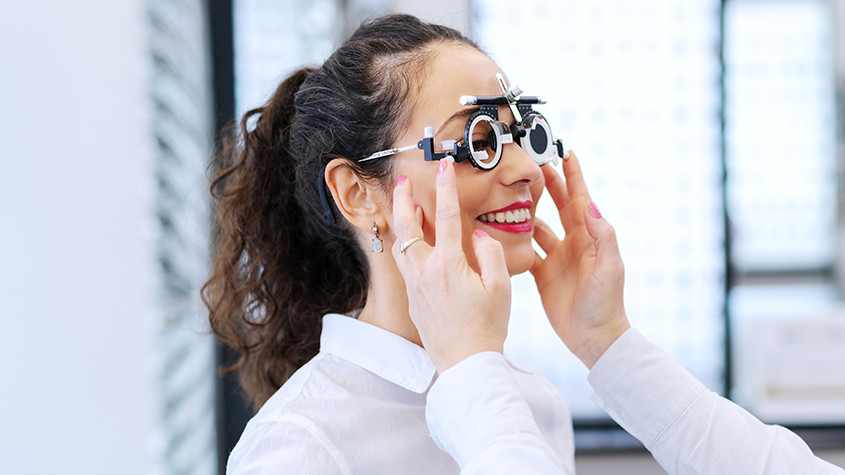
Whether you are new to the Westside, overdue for an eye exam, or simply switching to a closer office, that first appointment at an unfamiliar practice can bring a little uncertainty. What do you need to bring? Will your vision plan or medical insurance be accepted? How long will you be there, and what will the doctor actually do? Knowing what to expect makes the whole experience smoother and lets you get the most out of your visit.
A comprehensive eye exam is about much more than reading letters on a chart. It is a thorough evaluation of both how well you see and how healthy your eyes are — and because the eyes offer a direct view of blood vessels and nerve tissue, it can reveal early signs of conditions that affect your whole body.
At Westchester Vision Care in the Westchester neighborhood of Los Angeles (90045), Dr. Jennifer Tabiza welcomes new patients age 10 and older from Westchester, Playa del Rey, Playa Vista, El Segundo, and the surrounding Westside. Here is exactly what to expect from your first visit.
What to Bring to Your First Appointment
A little preparation makes your first visit efficient and thorough. Gathering a few items ahead of time helps the doctor understand your eyes and your health, and ensures your benefits are applied correctly. Plan to bring:
• Your current glasses, and your contact lenses or a recent contact lens box or prescription if you wear them.
• Your insurance information — both your vision plan and your medical insurance card, since either may apply (more on that below).
• A photo ID.
• A list of your current medications and any known allergies, as some medications affect the eyes.
• A summary of your medical history, including conditions like diabetes or high blood pressure and any family history of eye disease such as glaucoma or macular degeneration.
• Sunglasses, in case your pupils are dilated and your eyes are light-sensitive afterward.
If you have prescription or eye-health records from a previous provider, bringing them gives the doctor a helpful baseline for comparison.
Understanding Vision Insurance vs. Medical Insurance
One of the most confusing parts of eye care is that two different kinds of insurance can be involved, and which one applies depends on why you are being seen. Understanding this ahead of time prevents billing surprises.
A vision plan typically covers routine, preventive care — a comprehensive eye exam for glasses or contacts, and often an allowance toward frames, lenses, or contact lenses. Medical insurance, on the other hand, covers the diagnosis and treatment of eye conditions and medical concerns, such as dry eye, pink eye, an injury, diabetic eye exams, or evaluation of a disease like glaucoma.
That means a single visit could fall under either type of coverage depending on the reason and the findings. If you come in for a routine exam but the doctor discovers and evaluates a medical condition, part of the visit may be billed to medical insurance. The office staff can help verify your benefits and explain what to expect. When you book, mention the main reason for your visit so the right coverage can be confirmed in advance — and if you are unsure about your plan, just call and ask.
What Happens During the Exam
A comprehensive exam moves through several stages, each answering a different question about your vision and eye health. It usually begins with a conversation about your vision, your symptoms, your health history, and how you use your eyes at work and at home — this context shapes the entire exam.
From there, expect a series of painless tests. Preliminary measurements assess how your eyes focus and work together. The refraction determines your exact prescription, often using the familiar 'which is clearer, one or two?' comparison. Your eye pressure is measured to screen for glaucoma, and the doctor examines the front of your eyes with a microscope called a slit lamp.
To evaluate the retina and optic nerve at the back of the eye, the doctor may use dilating drops or wide-field retinal imaging. Dilation temporarily blurs near vision and increases light sensitivity for a few hours, which is why sunglasses come in handy. Throughout, Dr. Tabiza explains what she is seeing and what it means for you.
How Long the Visit Takes
Most patients wonder how much time to set aside, and the honest answer is that it varies with what your eyes need. Plan for roughly an hour for a comprehensive exam, though it can be shorter or longer depending on the tests involved and whether your eyes are dilated.
New-patient paperwork and insurance verification add a little time at the start, so arriving a few minutes early — or completing any forms in advance — keeps things moving. If you are choosing glasses or contacts afterward, budget extra time to browse frames, review lens options, and get properly fitted.
If dilation is part of your exam, keep in mind that your near vision may be blurry for several hours afterward, so it is smart to plan your day accordingly and, ideally, arrange a ride if you know bright light bothers you.
What Happens After the Exam
At the end of your exam, Dr. Tabiza will review the findings with you in plain language — your prescription, the health of your eyes, and anything that needs attention or monitoring. This is the ideal moment to ask questions about your vision, any symptoms you have noticed, or your options for glasses, contacts, or treatment.
If you need vision correction, you can select frames and lenses or discuss contact lens options, with fitting and measurements handled on site. If an eye-health concern was found, the doctor will explain the plan, whether that means treatment, follow-up, or a referral. You will also receive guidance on when to return — for most patients, that means an annual comprehensive exam.
You leave with a clear understanding of your eye health, a current prescription if needed, and a plan for keeping your vision at its best. Nothing about the process should feel mysterious once you know what to expect.
Book Your First Visit With Confidence
Starting care with a new eye doctor should feel welcoming, not intimidating. Now that you know what to bring, how insurance works, and what the exam involves, you can book that first appointment with confidence and get the thorough, personalized care your eyes deserve.
Dr. Jennifer Tabiza welcomes new patients age 10 and older at Westchester Vision Care in the Westchester neighborhood of Los Angeles, CA 90045, conveniently located for Playa del Rey, Playa Vista, El Segundo, and the communities near LAX. To schedule your first visit, call (310) 670-1888 or book online today.
Book a Contact Lens Fitting When You Want Contacts — Even If You Already Have a Prescription
A glasses prescription is not a contact lens prescription. Contacts sit directly on the eye, so a proper fitting includes measurements, an evaluation of the tear film, a trial lens, and a check of how the lens centers and moves. That is true for daily disposables, toric lenses for astigmatism, multifocals, color contacts, and specialty lenses.
A fitting is especially important if lenses become dry by afternoon, move around, blur intermittently, or leave your eyes red at the end of the day. The solution may be a different lens material or replacement schedule, a better fit, treatment for an underlying tear-film issue, or a combination of all three.
Schedule a Dry Eye Evaluation When Drops Are Not Solving the Problem
Burning, grittiness, tearing, fluctuating vision, contact lens discomfort, and tired eyes after screen time can all be signs of dry eye disease. Artificial tears may provide brief comfort, but frequent symptoms deserve a real evaluation of the tear film, eyelids, and meibomian glands — the oil-producing glands that keep tears from evaporating too quickly.
At Westchester Vision Care, dry eye care can include targeted home treatment and, when appropriate, advanced options such as OptiLIGHT IPL and radiofrequency therapy. A dry eye evaluation is often billed through medical insurance rather than a vision plan, because it addresses a medical eye condition. Our team can help determine which coverage applies.
Do Not Wait on a Sudden Red, Painful, or Light-Sensitive Eye
A sudden red eye may be caused by allergies, dry eye, a viral or bacterial infection, a scratched cornea, a foreign body, contact lens complications, or something more serious. If you have pain, light sensitivity, discharge, an injury, a change in vision, or a red eye while wearing contacts, do not assume it is ordinary pink eye or try to treat it with leftover drops.
Call for a prompt red-eye or urgent eye care visit. These concerns are generally medical visits, not routine vision-plan visits. Early evaluation is especially important for contact lens wearers because a corneal infection can worsen quickly.
See an eye doctor in Westchester, Los Angeles
We welcome patients from Playa Vista, Marina del Rey, Playa del Rey, El Segundo and the surrounding 90045 neighborhoods.
8610 S Sepulveda Blvd #100, Los Angeles, CA 90045 · (310) 670-1888
Book a ConsultationThis article provides general education, not a diagnosis or individualized medical advice. Please see an eye care professional about your specific symptoms.