
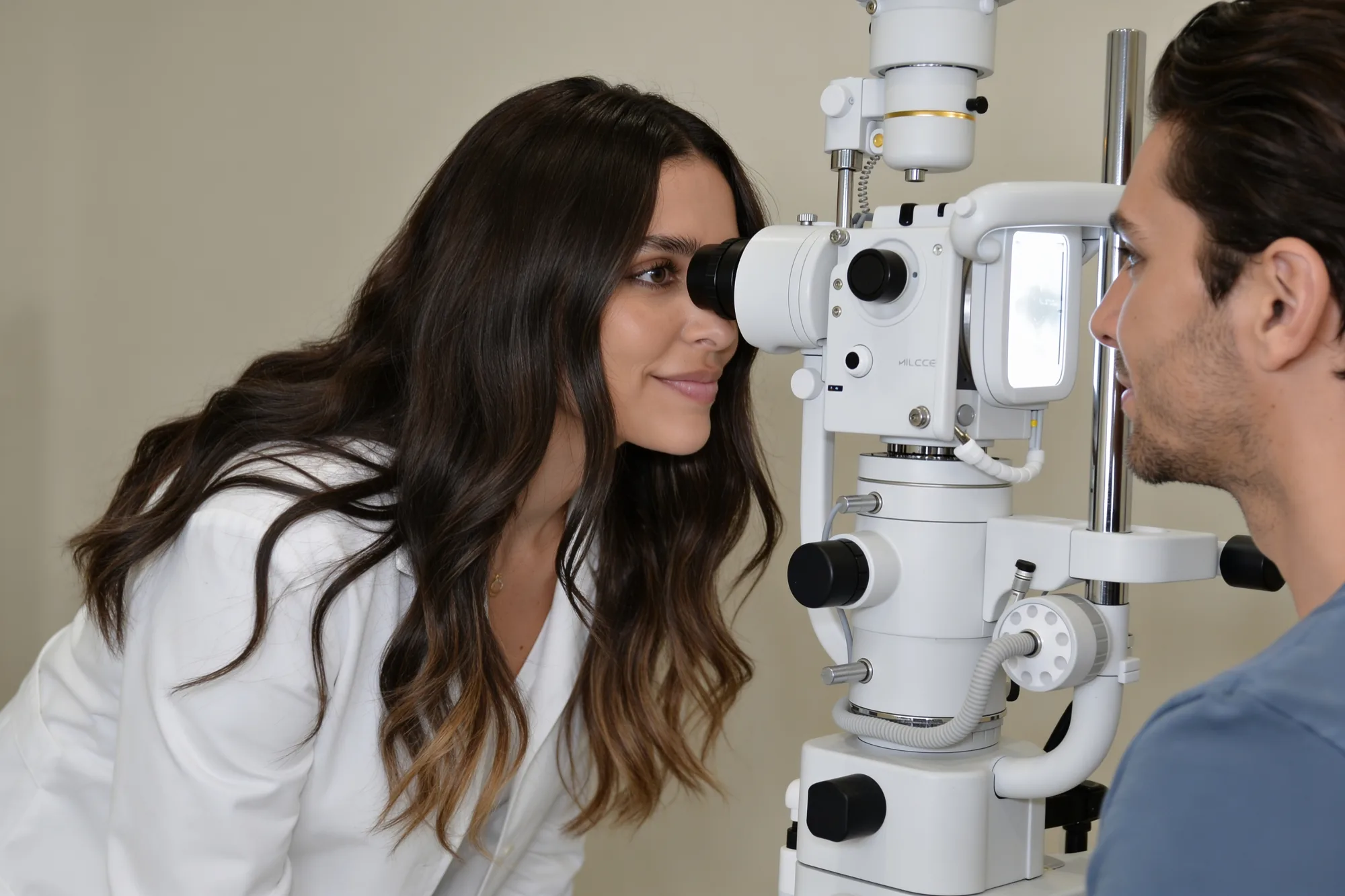
Meibomian gland dysfunction, or MGD, is the leading cause of dry eye, and yet it is one of the most under-recognized eye conditions there is. The reason is simple: its early symptoms are easy to explain away. A little burning after a long day, eyes that water in the wind, vision that blurs and then clears — most people chalk these up to being tired, allergies, or too much screen time.
The trouble is that MGD tends to progress quietly. When the tiny oil glands in your eyelids stay blocked for too long, they can shrink and eventually stop producing oil for good. That gland loss is difficult to reverse. Catching the problem early, while the glands are still healthy, gives you the best chance to protect them. Below are seven early warning signs Dr. Jennifer Tabiza encourages patients at Westchester Vision Care to take seriously.
The First Three Signs: Sensation Changes
The earliest clues often show up as changes in how your eyes feel throughout the day.
• A gritty or sandy feeling. Many people describe it as if an eyelash or a speck of dust is stuck in the eye, even though nothing is there. This foreign-body sensation is a classic early symptom of an unstable tear film.
• Burning or stinging that worsens as the day goes on. If your eyes feel fine in the morning but sore and irritated by afternoon or evening, the oil layer of your tears is likely thinning out as the hours pass.
• A feeling of dryness paired with tired, heavy eyes. Eye fatigue that arrives earlier and earlier is often an overlooked signal that the surface is struggling to stay lubricated.
Signs Four and Five: Vision and Watering
The next two signs can seem contradictory, but both point to the same underlying issue.
• Fluctuating or intermittent blurry vision. If your sight blurs and then sharpens right after a blink, that is a strong sign your tear film is breaking up too quickly between blinks. Unlike a prescription change, this kind of blur comes and goes.
• Watery, tearing eyes. It sounds backward that dry eye would cause watering, but it is very common. When the surface becomes irritated from a poor oil layer, the eye floods itself with reflex tears. Those watery tears lack oil, so they run down the cheek instead of staying put — and the dryness continues.
Signs Six and Seven: The Lid Margins
The last two signs are visible if you look closely in the mirror, and they involve the edges of your eyelids where the glands live.
• Redness or irritation along the lid margins. Chronic inflammation at the base of the lashes often signals that the glands and surrounding tissue are inflamed.
• Crusting, flaking, or debris at the lash line, especially in the morning. This buildup can point to blepharitis, which frequently travels alongside MGD and worsens gland blockage.
You may also notice your contact lenses becoming less comfortable, or a stye or bump appearing more often than it used to. These are related clues that the glands are not draining properly.
Why Early Action Protects Your Glands
The single most important reason to act early is that meibomian glands can be lost. Imaging technology now allows eye doctors to actually see the glands within the eyelids and measure how many remain healthy. In advanced MGD, those images show glands that have thinned, shortened, or disappeared. That damage is largely permanent, which is why timing matters so much.
When MGD is identified early, there are many effective ways to preserve gland function — from lid hygiene and warm therapy at home to in-office treatments like OptiLIGHT intense pulsed light and TempSure Envi radiofrequency that restore gland health directly. The earlier you start, the more you have to work with.
If two or three of these signs sound familiar, do not wait for them to become constant. A dry eye evaluation can determine what is happening and how much gland function you still have. Dr. Jennifer Tabiza sees patients age 10 and older at Westchester Vision Care in Westchester, Los Angeles, serving the surrounding beach and Westside communities. Schedule a consultation to protect your eyes while there is still plenty to protect.
See an eye doctor in Westchester, Los Angeles
We welcome patients from Playa Vista, Marina del Rey, Playa del Rey, El Segundo and the surrounding 90045 neighborhoods.
8610 S Sepulveda Blvd #100, Los Angeles, CA 90045 · (310) 670-1888
Book a ConsultationThis article provides general education, not a diagnosis or individualized medical advice. Please see an eye care professional about your specific symptoms.