
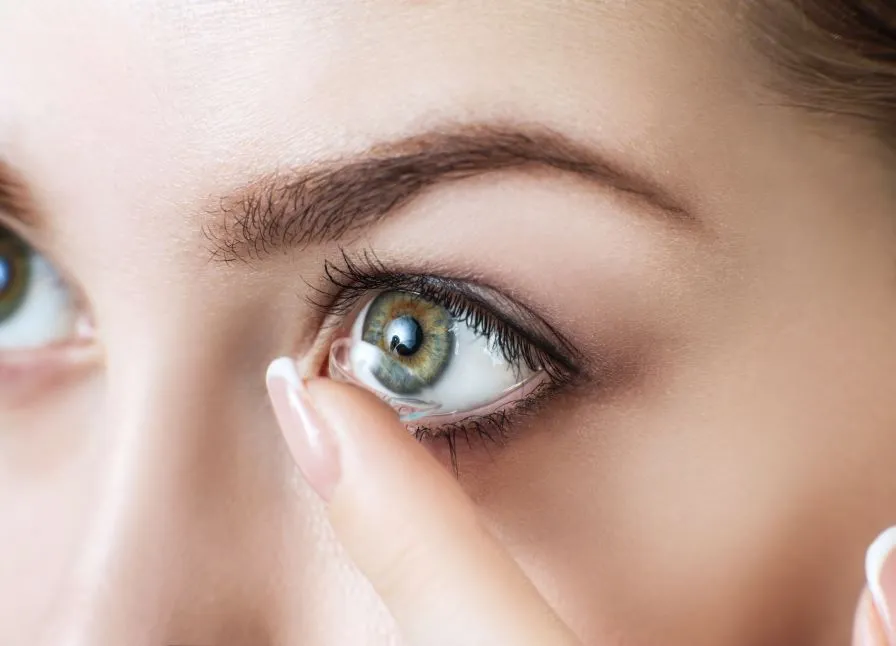
Southern California practically runs on movement. Around Westchester and the surrounding coastal communities — Playa del Rey, Playa Vista, El Segundo, Marina del Rey, and beyond — people are out cycling the bike path, playing beach volleyball, running, surfing, and filling weekend fields with youth soccer and basketball. For anyone in that world who needs vision correction, glasses can quickly become the weak link.
Glasses slide down a sweaty nose, fog up, bounce with every stride, fall off in a tackle, and can shatter or injure the wearer on impact. Their frames also block part of your peripheral vision — precisely the wide-angle awareness an athlete relies on to track a ball, a teammate, or an oncoming opponent. It is no coincidence that so many serious and recreational athletes switch to contact lenses for anything physical.
At Westchester Vision Care in the Westchester neighborhood of Los Angeles, Dr. Jennifer Tabiza fits patients age 10 and older with contact lenses and helps active patients find the right option for how they actually move. Here is why contacts are so well suited to sport, how to match the lens type to your activity, and the one place contacts absolutely should not go.
Why Contacts Beat Glasses for Athletes
The advantages of contact lenses in sport come down to how they move with your eye rather than sitting on your face. Because a contact lens rests directly on the eye, your correction goes wherever your gaze goes, which delivers several concrete benefits:
• Full peripheral vision. There are no frames blocking the edges of your sight, so you keep the wide field of view that lets you sense motion and react — critical in fast team sports.
• A stable image. Glasses shift and bounce as you run and jump, and the image moves with them; contacts stay put, so what you see stays steady.
• No fogging, rain spots, or sweat smears on a lens between you and the action.
• Compatibility with gear. Contacts fit cleanly under swim goggles, ski goggles, safety goggles, and helmets, and they do not clash with a helmet's fit the way glasses arms do.
• No impact risk from frames. Nothing on your face to be knocked into your eye or broken during contact.
For sports where sunglasses matter — cycling, running, water sports, anything in bright coastal glare — contacts also let you wear ordinary, non-prescription sunglasses or protective eyewear, which are cheaper, more variable, and often better designed for the activity than prescription sport frames.
Matching the Lens to the Sport
The best lens for sport depends on the activity, your prescription, and how often you play. A few general guidelines help:
• For most athletes, daily disposable soft lenses are the ideal choice. A fresh lens every session means nothing to clean or store, minimal infection risk if you rarely wear lenses otherwise, and no worry about losing an expensive reusable lens mid-game.
• For high-impact and contact sports, soft lenses are strongly preferred over rigid gas-permeable lenses, which can dislodge more easily with sudden movement or impact.
• For athletes with astigmatism, toric soft lenses stay oriented on the eye to keep vision crisp during motion — important when a slightly blurred or rotating image can throw off your timing.
• For occasional weekend athletes who otherwise wear glasses, a box of dailies just for sports is often the simplest and healthiest solution, avoiding a full-time lens commitment.
Whatever the sport, proper protective eyewear still matters. Contacts correct your vision but do not protect your eyes from a ball, elbow, or debris, so sport goggles or safety eyewear over your contacts are the gold standard for anything with a real impact risk.
Sun, Glare, and Coastal Conditions
An active LA lifestyle usually means a lot of sun. Bright coastal light and glare off water and sand can strain the eyes and, over years, contribute to UV-related eye damage. Contacts pair perfectly with a good pair of UV-blocking wraparound sunglasses, which shield your eyes from glare and debris while your lenses handle the correction.
Some contact lenses include a UV-blocking component in the material, which is a helpful bonus. It is important to understand, though, that a contact lens covers only the cornea and not the entire surface of the eye and the delicate skin around it — so a lens with UV protection is a supplement to sunglasses, never a replacement for them. On bright days by the water, wear both.
Wind and dry coastal air can also speed up tear evaporation and make lenses feel dry during long outdoor sessions. Carrying preservative-free rewetting drops approved for use with contacts, and staying well hydrated, keeps lenses comfortable through a long day outside.
The Water Rule You Should Never Break
Here is the single most important safety caveat for active people: never swim, surf, shower, or soak in a hot tub while wearing contact lenses. This is not an overly cautious suggestion — it is a firm rule that protects you from a rare but potentially blinding infection.
Water of every kind — ocean, pool, lake, tap water, even bottled water — can carry microorganisms, and one in particular, Acanthamoeba, can cause a severe, difficult-to-treat corneal infection. Contact lenses trap water against the eye and can absorb these organisms, dramatically raising the risk. Pool chlorine does not make this safe, and salt water is no exception.
If you want clear vision in the water, the right tools are prescription swim goggles or contacts worn only under well-sealed swim goggles with the understanding that any water intrusion means removing and discarding the lenses afterward — ideally daily disposables you can throw away immediately. The simplest and safest approach for most people is prescription goggles for swimming and contacts for everything else. And if water does get into your eyes while wearing lenses, remove and discard those lenses rather than continuing to wear them.
Get Fitted for Sport at Westchester Vision Care
If your glasses are holding back your game or your outdoor life, contact lenses may be exactly what you need to move freely and see clearly. We can evaluate your eyes, discuss the sports and activities you love, and fit you with lenses suited to how you actually play.
Dr. Jennifer Tabiza fits patients age 10 and older at Westchester Vision Care in the Westchester neighborhood of Los Angeles, CA 90045, serving active patients across Playa del Rey, Playa Vista, El Segundo, Marina del Rey, and the greater LAX area. To schedule a contact lens fitting, call (310) 670-1888 or book online today.
See an eye doctor in Westchester, Los Angeles
We welcome patients from Playa Vista, Marina del Rey, Playa del Rey, El Segundo and the surrounding 90045 neighborhoods.
8610 S Sepulveda Blvd #100, Los Angeles, CA 90045 · (310) 670-1888
Book a ConsultationThis article provides general education, not a diagnosis or individualized medical advice. Please see an eye care professional about your specific symptoms.