
Cataracts have a way of sneaking up on people. Because they develop so slowly, many people gradually adjust to dimmer, hazier vision without realizing how much they have lost — until routine tasks like reading a menu, driving at night, or recognizing faces become noticeably harder. The good news is that cataracts are extremely common, well understood, and highly treatable.
A cataract is a clouding of the eye's natural lens, the clear structure inside the eye that helps focus light onto the retina. When that lens becomes cloudy, it is like looking through a foggy or frosted window: light scatters, colors dull, and images lose their crispness. Most cataracts are simply a part of aging, though other factors can contribute.
At Westchester Vision Care in the Westchester neighborhood of Los Angeles, Dr. Jennifer Tabiza diagnoses and monitors cataracts for patients age 10 and older as part of a comprehensive eye exam, and helps guide patients on when and how to pursue treatment.
What Causes Cataracts
The most common cause of cataracts is simply aging. Over time, proteins within the eye's natural lens break down and clump together, gradually clouding what was once a clear structure. Because this happens slowly, age-related cataracts often take years to become bothersome.
Other factors can contribute to or accelerate cataract development, including:
• Long-term exposure to ultraviolet light from the sun.
• Certain medical conditions, such as diabetes.
• Long-term use of certain medications.
• Previous eye injury or eye surgery.
• Smoking.
• Family history.
While age-related cataracts are by far the most common, cataracts can occasionally occur in younger people or even be present at birth. Regardless of the cause, the underlying issue is the same: a lens that has lost its clarity.
Signs and Symptoms to Watch For
Because cataracts progress gradually, their symptoms can be easy to dismiss at first. Recognizing the common signs can help you seek care before your vision interferes with daily life.
Typical symptoms include:
• Blurry, cloudy, or hazy vision that glasses do not fully correct.
• Increased sensitivity to glare and halos around lights, especially at night.
• Difficulty seeing while driving after dark.
• Colors appearing faded or yellowed.
• Needing brighter light for reading and close work.
• Frequent changes in your glasses prescription.
• Double vision in one eye.
Any one of these on its own does not confirm a cataract, but together they warrant an eye exam. Only a comprehensive evaluation can determine whether a cataract is responsible and how advanced it is.
How Cataracts Are Diagnosed and Monitored
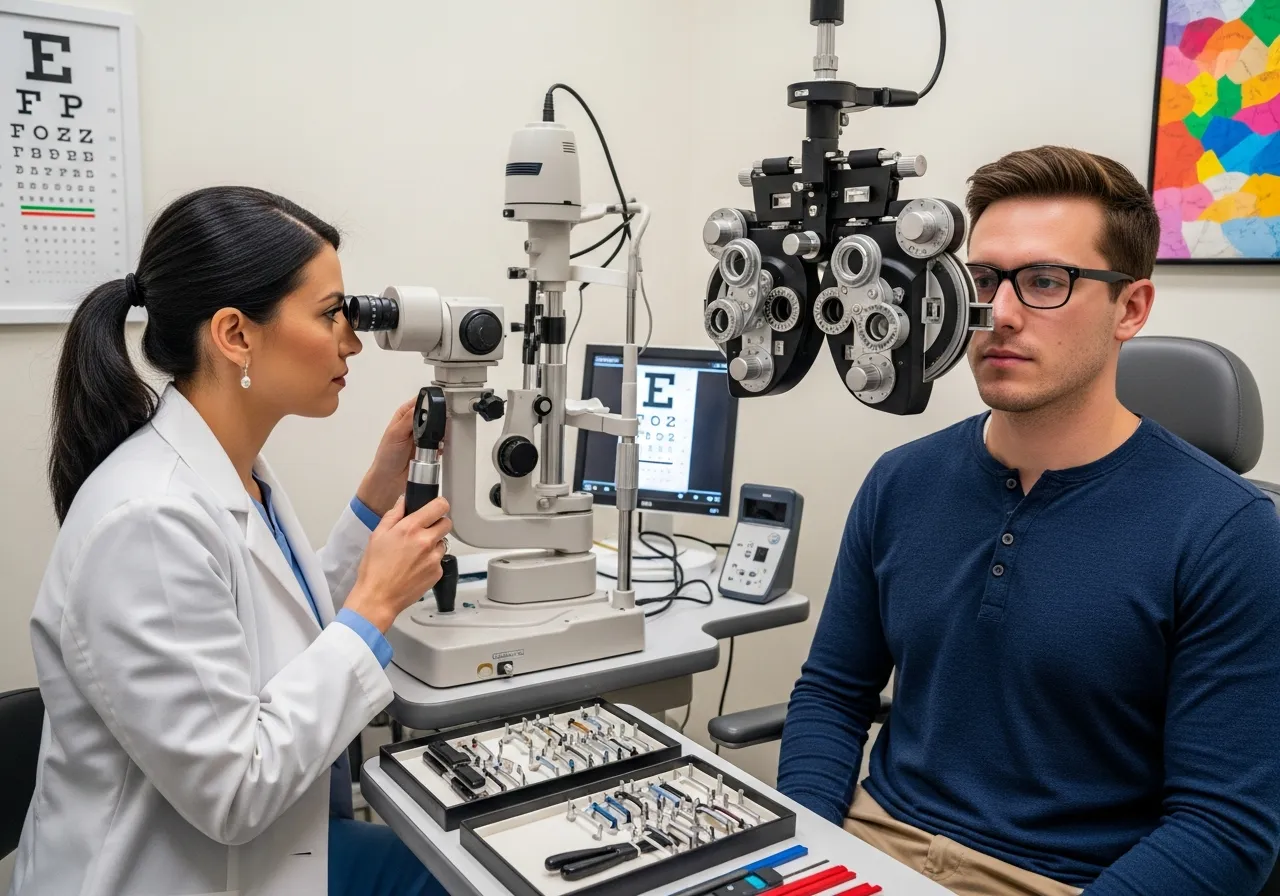
Cataracts are detected during a comprehensive eye exam. Your eye doctor evaluates your vision and examines the lens and the rest of the eye, often after dilating the pupils to get a clear view inside. This allows the doctor to see the cataract, assess its severity, and rule out other causes of vision changes.
In the early stages, a cataract may cause only minor symptoms that can be managed with updated glasses, better lighting, and reduced glare. At this point, treatment is not necessarily needed, and the cataract can simply be monitored over time at regular exams.
As the cataract advances and begins to interfere with daily activities you value — reading, driving, working, or hobbies — the conversation shifts toward treatment. There is no need to rush, but there is also no benefit to letting vision decline unnecessarily when an effective solution exists.
Treatment: Restoring Clear Vision
In the earliest stages, non-surgical measures can help you cope with mild symptoms. Updated prescriptions, anti-glare lens options, brighter lighting, and magnification for close work may keep you comfortable for a time.
Ultimately, however, the definitive treatment for a cataract is surgery to replace the clouded natural lens with a clear artificial lens. Cataract surgery is one of the most commonly performed and successful procedures, and for the vast majority of people it restores clear, vibrant vision. When your cataract reaches the point that surgery is appropriate, your eye doctor can guide you through the process and coordinate a referral to a surgeon.
The key point for patients is reassurance: cataracts are not a permanent sentence to blurry vision. With proper monitoring and, when the time is right, treatment, clear vision can be restored.
Don't Live With Blurry Vision
If your world has been looking hazier, dimmer, or more glare-filled than it used to, do not simply write it off as getting older. A comprehensive eye exam can determine whether cataracts are the cause and help you plan the right next step.
Dr. Jennifer Tabiza sees patients age 10 and older at Westchester Vision Care in the Westchester neighborhood of Los Angeles, CA 90045. To schedule an eye exam or discuss cataract concerns, call (310) 670-1888 or book online today.
See an eye doctor in Westchester, Los Angeles
We welcome patients from Playa Vista, Marina del Rey, Playa del Rey, El Segundo and the surrounding 90045 neighborhoods.
8610 S Sepulveda Blvd #100, Los Angeles, CA 90045 · (310) 670-1888
Book a ConsultationThis article provides general education, not a diagnosis or individualized medical advice. Please see an eye care professional about your specific symptoms.