
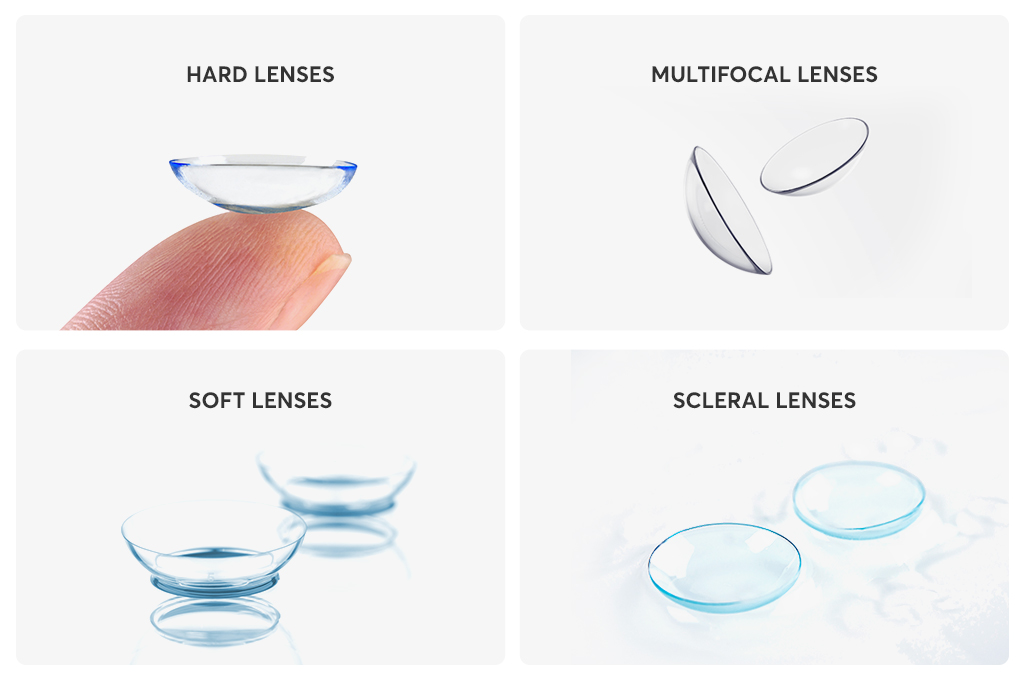
If you have ever been told you are "not a good candidate" for multifocal contact lenses because of astigmatism, you are not alone — and the news has finally changed in your favor. For a long time, the combination of presbyopia and astigmatism was one of the hardest prescriptions to fill in a comfortable daily disposable lens. The technology that corrected both problems at once in a single-use lens simply did not exist in a wide enough range for most people who needed it.
That is what makes the ACUVUE OASYS MAX 1-Day family genuinely significant. It includes both a MULTIFOCAL lens and, importantly, a MULTIFOCAL for ASTIGMATISM lens — a daily disposable that combines toric (astigmatism) correction with multifocal (reading and distance) correction in the same lens. For a large group of people who had resigned themselves to reading glasses over their contacts, or to giving up on contacts entirely, this opens a door that used to be closed.
At Westchester Vision Care in the Westchester neighborhood of Los Angeles, Dr. Jennifer Tabiza fits patients age 10 and older with contact lenses and stays current with lens technology like this. Here is what these lenses do, why the expanded prescription range matters, and how to tell whether they might be right for you.
Presbyopia and Astigmatism: Two Different Problems at Once
To understand why this lens is a breakthrough, it helps to understand the two conditions it corrects, because they are entirely separate issues that happen to affect many of the same people.
Presbyopia is the age-related change that begins for most people in their early to mid 40s, when the natural lens inside the eye gradually loses its ability to shift focus for near tasks. This is why arms suddenly feel "too short," menus get harder to read in dim light, and small print becomes a struggle. It happens to essentially everyone eventually, regardless of whether they needed glasses before.
Astigmatism is unrelated to age. It is a difference in the curvature of the cornea or lens — the eye is shaped a bit more like a football than a basketball — which blurs and distorts vision at all distances until it is corrected. Astigmatism requires a lens that is oriented and stabilized correctly on the eye, which is what makes a "toric" lens more complex than a standard round-power lens.
When someone has both, they need near-and-distance correction and precise astigmatism correction simultaneously. Combining those requirements in one soft daily lens — while keeping it comfortable and keeping the correction stable as the eye moves — is technically demanding, which is exactly why options were so limited for so long.
Why the Expanded Prescription Range Is the Real Story
Contact lenses that combine multifocal and toric correction have existed before, but the practical problem was range. A lens that only comes in a narrow set of powers and astigmatism amounts will fit only a fraction of the people who need it — and if your particular numbers fall outside that set, the lens might as well not exist for you.
The significance of the ACUVUE OASYS MAX 1-Day MULTIFOCAL for ASTIGMATISM is how much it widens that range. By offering the combination across a far broader set of prescriptions than was previously practical in a daily disposable, it moves multifocal-toric contacts from a niche option that fit relatively few people to a realistic choice for a large share of presbyopes with astigmatism.
In plain terms: if you were told a few years ago that your prescription "didn't come" in a daily multifocal, that answer may no longer be true. The category has expanded, and it is worth being re-evaluated rather than assuming the old limitations still apply.
PUPIL OPTIMIZED Design: How the Multifocal Works
Multifocal contact lenses do not have separate segments like a bifocal spectacle lens. Instead, they blend different focusing powers across the lens so that your visual system can use the appropriate zone for near, intermediate, and distance vision. Getting that blend right is the art of a good multifocal.
The ACUVUE OASYS MAX 1-Day MULTIFOCAL uses what ACUVUE calls a PUPIL OPTIMIZED design. Pupil size is not the same for everyone — it varies with age and with the individual, and it changes depending on the prescription and lighting. A design that optimizes the power layout to account for how pupil size varies across different patients and prescriptions aims to deliver more consistent vision across near, intermediate, and far distances for a wider variety of eyes.
The MAX 1-Day family also incorporates TearStable Technology, which is engineered to help maintain a stable tear film and support comfort throughout a long day of wear — a meaningful benefit for presbyopic patients, who often also deal with drier eyes as they get older. Comfort and vision are both part of why patients stay in a lens, so pairing the optical design with tear-film support matters.
Who Is a Candidate?
These lenses are worth discussing if you recognize yourself in the following:
• You are in your 40s or older and have noticed you now need to hold things farther away, or reach for readers, to see up close.
• You have astigmatism and have been told in the past that it limited your contact lens options, especially for multifocals.
• You currently wear reading glasses over your contacts, or switch between multiple pairs of glasses, and want a simpler solution.
• You want the convenience and hygiene of a daily disposable lens rather than a reusable one you clean and store.
• You are motivated to give the lenses a genuine adaptation period, since multifocals ask your visual system to learn a new way of seeing.
Not everyone will end up in a multifocal-toric daily, and results depend on your specific eyes, prescription, and visual demands. Some people adapt easily and love them; others do better with a different strategy. The only way to know is a proper fitting and a trial, which is exactly what a contact lens evaluation is designed to provide.
Setting Expectations for Multifocal Contacts
It is worth being honest about how multifocal contacts work, because the patients who do best are the ones who understand the trade-off going in. Multifocal lenses give your brain access to multiple focal distances at once, and the visual system learns over days to weeks to select the right one automatically. During that adaptation, vision may feel slightly softer than the crisp, single-distance sharpness of a standard lens, particularly in dim light.
For most people, that trade — a brief adjustment and a subtle softening in exchange for functional vision at all distances without reaching for readers — is well worth it. The fitting process often involves fine-tuning the powers to balance your near and distance vision to your personal priorities, whether you spend more of your day on a screen, on the road, or with a book.
Because this is a fitting-and-refinement process rather than a one-and-done prescription, working with a doctor who will dial the lenses in makes a real difference in whether you end up loving them.
See If You're a Candidate at Westchester Vision Care
If presbyopia and astigmatism have kept you out of daily multifocal contacts, the expanded ACUVUE OASYS MAX 1-Day range may finally be the answer — but the right lens for you depends on your eyes and a proper fitting. We can evaluate your prescription, measure your eyes, and let you trial the lenses to see how they perform in your real life.
Dr. Jennifer Tabiza fits patients age 10 and older at Westchester Vision Care in the Westchester neighborhood of Los Angeles, CA 90045, convenient to Playa Vista, Playa del Rey, El Segundo, and Culver City near LAX. To schedule a contact lens evaluation, call (310) 670-1888 or book online today.
See an eye doctor in Westchester, Los Angeles
We welcome patients from Playa Vista, Marina del Rey, Playa del Rey, El Segundo and the surrounding 90045 neighborhoods.
8610 S Sepulveda Blvd #100, Los Angeles, CA 90045 · (310) 670-1888
Book a ConsultationThis article provides general education, not a diagnosis or individualized medical advice. Please see an eye care professional about your specific symptoms.